
Nashville Business Brokers
Business Brokers Serving Nashville & All of Middle Tennessee
Nashville business brokers and M&A advisors for Middle Tennessee owners. We sell businesses with $1.5M or more in revenue, confidentially, with a 90%+ close rate.

Sell a Business in Nashville, TN
Selling a Nashville business is one of the largest financial events of an owner's life, and it deserves a process built for it rather than a generic broker template. Our Nashville business brokers handle every sale end to end, from preparing the financial story and building a Confidential Information Memorandum, to quietly running a structured outreach campaign across multiple buyer types, to negotiating the Letter of Intent and quarterbacking due diligence through closing. The work happens in a particular sequence for a reason, and that sequence is what produces clean closes at the right number rather than messy ones at a discount.
The named lead on Nashville engagements is Wes McDonough, a twenty-year Nashville resident with twenty-five-plus years across M&A, corporate finance, and entrepreneurship. Wes runs the day-to-day on every Middle Tennessee deal: the seller relationship, the valuation conversations, the buyer outreach, the negotiation, and the diligence quarterbacking through close. Greg Knox, CFA backs Wes on every engagement, anchoring valuation work and serving as the senior lead on larger M&A transactions where institutional buyer dynamics, complex deal structuring, or cross-border buyer pools drive the outcome. Behind Wes and Greg sits a CGK national team of managing directors and senior advisors with backgrounds at Deutsche Bank, T. Rowe Price, Wachovia, Chevron, Shell, major hedge funds, Fortune 500 corporate finance, and large-cap M&A advisory firms. That depth gets pulled in on bigger deals and on national or cross-border buyer pools.
We work with Nashville businesses in the High Main Street and lower-middle-market range, which for us means companies in the $1.5M to $100M revenue band, or roughly $300K to $10M of Seller's Discretionary Earnings. Across the broker industry as a whole, only about one in five listed businesses actually closes. Our close rate is 90% or higher. Two halves explain the gap. The front-end filter keeps us from taking on engagements we do not believe can close, because over-listing wastes a year of an owner's time and leaves the business with the wrong story when it eventually does go to market. The back-end execution, the way we package the company, run the buyer process, negotiate the LOI, and quarterback diligence, is what carries the deal from accepted offer through wire transfer. Both halves are necessary. Neither half is enough on its own.
Our work has been featured nationally on Inside The Blueprint, the syndicated business television series. National exposure matters less than what it signals: this is not a one-market, one-broker shop. CGK is a national M&A firm with a Nashville office on Church Street and a deep bench, and our Nashville sellers benefit from both the local presence under Wes McDonough and the broader buyer network and institutional discipline that come with it.

As Seen on Inside the Blueprint
CGK Business Sales is featured on Inside The Blueprint, a national business television series highlighting the firms and operators shaping the U.S. M&A and business-brokerage market. The segment below walks through how our process actually works on the ground, the kinds of Nashville sellers we partner with, and what separates a structured CGK engagement from the broader brokerage industry. Watch the segment, then start a confidential conversation with our Nashville business brokers about your own company.
What Nashville Business Owners Say
A handful of recent five-star reviews from sellers our Nashville business brokers have worked with, anchored on Wes McDonough's named-lead track record across Middle Tennessee and the broader CGK national bench:
"Wes is by far one of the most caring, honest, ethical people I have had the pleasure of dealing with in years of being a business owner. I deal with a lot of people on a daily basis. I would highly recommend CGK to anyone in need of selling a business. Wes was extremely helpful and very knowledgeable. I am forever grateful."
— Stephany S., Middle Tennessee seller
"Wes McDonough and CGK were invaluable in my search to buy a business. Their professionalism, knowledge of the Nashville market, and experience would make them a great fit for local sellers going through succession planning."
— Slava B., Nashville buyer
"Wes McDonough was very helpful in his evaluation and review of our financials in determining an estimated value of our business. He asked good questions and interpreted our information and history to offer good advice. We really appreciate it."
— Steve C., Nashville valuation customer
"We have worked with Greg and Wes and have been thrilled with their results. I hate sales people. I like people that explain things, answer questions clearly, and give me the facts, numbers, and information I need. Both Wes and Greg did this."
— Susan L., Nashville valuation customer
"It was my first time ever selling my company and Wes was amazing! He was able to explain anything I didn't understand and made it a very smooth and easy process. I would definitely recommend him to get the job done."
— Nuveldy Andino, Nashville seller
"Wes was outstanding, guiding us through each step, offering perspective and solutions. His dedication, perseverance, and ingenuity made our business sale happen. I strongly recommend Wes and CGK Business Sales."
— Suzanne Piispanen, Nashville seller
Get a Free Valuation
Get a Free, Confidential Business Valuation
A free, confidential valuation is the cleanest way to start a conversation about selling your Nashville business. We model a defensible price range, walk through the after-tax outcome against your goals, and give you our honest read on whether to go to market now or use the next twelve to twenty-four months to get the business ready. Send the form below and our Nashville business brokers will be in touch within one business day.
Every inquiry is read personally by our Nashville team. No shared inbox, no sales queue, no upfront fees, no obligation.
Our selling process is tailored for businesses with $1.5 million or more in annual revenue (up to $100 million) and $300,000 to $10 million in Seller's Discretionary Earnings.

When to Call Nashville Business Brokers
There is no perfect day on the calendar to start a conversation about selling a Nashville business. But there are specific situations where waiting another year costs more than any other choice you could make. Three patterns show up most often.
The first is the unsolicited approach. A competitor's M&A team, a private-equity associate, a healthcare-focused strategic acquirer rolling up around HCA Healthcare and the Vanderbilt ecosystem, or a Brentwood-anchored family office reaches out unannounced and asks whether you would entertain a sale conversation. Almost every owner's first instinct is one of two reactions, and both leave real money on the table. Dismissing the outreach as a fishing expedition surrenders genuine buyer interest at the exact moment your leverage is at its highest. Engaging directly, without a broker walking the conversation, puts you across the table from a buyer who knows there are no other bidders, and that knowledge anchors the eventual price below what a structured competitive process would have produced. The right move is to acknowledge the inquiry briefly, then put a broker-led process around it before the second conversation happens. Many of our highest-multiple Nashville closes started exactly this way.
The second is the personal trigger. The decision to sell rarely shows up overnight. It builds across months out of a stack of life-stage pressures, and any single one of them justifies starting the conversation. A spouse who retires earlier than expected. A health diagnosis that pulls the runway in. A son or daughter who once looked like the natural next CEO choosing a different career path. An estate-planning conversation that suddenly has urgency. A divorce or a partnership dispute that needs to be resolved through a sale. A new venture or a real-estate move you want this exit to fund. Each of these compresses the timeline between deciding to sell and needing to close. The earlier we are in the room, the more flexibility you have on structure, on timing, and on what happens to the business and the team you built. Sellers who wait for the trigger to land before calling almost always end up with a tighter timeline, a narrower buyer pool, and a worse outcome.
The third is the business-performance window. Buyers pay the highest multiples for businesses with growing revenue, expanding margins, a deeper management bench, cleaner books, and less owner-dependent customer relationships than they had two years ago. If the trailing twelve-month picture is the strongest one a prospective buyer would see, the window is open right now. The healthcare strategics rolling up around HCA and the Vanderbilt ecosystem, the hospitality consolidators acquiring restaurant groups, hotel portfolios, and live-music venues across the metro, the auto and advanced-manufacturing platforms in Spring Hill and Smyrna, and the national private-equity platforms hunting in the lower-middle market are all looking for the same thing: a company that is still climbing rather than one that has already peaked. The cost of going to market six months early is almost always smaller than the cost of going six months late.
Any one of these three scenarios is enough to justify an initial call. None of them obligate you to anything. Our Nashville business brokers will spend an hour with you, give you our honest read, and tell you whether we think the timing is right or whether we think you should wait twelve to twenty-four months and use the runway. Either answer is valuable. Call (615) 800-7118 or send a note through the valuation form above to start the conversation.
How a Nashville Business Broker Helps You Sell
Selling a Nashville business breaks into five distinct disciplines, and a meaningful percentage of the eventual sale price is determined by how well each one is handled. Our Nashville business brokers run all five in parallel, on every engagement.
- Defensible Valuation. Every CGK Nashville engagement opens with a CFA-anchored valuation built on three independent lenses: recent M&A comparables in your sector, an EBITDA or SDE-based earnings analysis, and a working-capital and balance-sheet review. Greg Knox's CFA discipline backs the valuation work on every Nashville deal, the same designation that anchors institutional sell-side equity research and asset-management analysis. The number we put on paper has to defend itself when a buyer's analyst tries to renegotiate it down at LOI. Soft valuations become the ceiling on the deal. Defensible ones become the floor.
- Confidential Marketing and Packaging. Once you engage, we build the materials a serious buyer needs to make a serious offer: a blind teaser that protects your identity, a full Confidential Information Memorandum, a structured data room, and any sector-specific exhibits the deal will need (provider rosters and payor mix for healthcare and home-services deals; venue and tour calendars for music and entertainment deals; same-store sales and unit-level economics for restaurant and hospitality deals). Your identity stays masked until a buyer signs an NDA.
- Competitive Buyer Outreach. We run a structured outreach campaign across four buyer categories at the same time: strategic acquirers, private-equity platforms and add-ons, search funds and independent sponsors, and high-net-worth or family-office buyers. In Nashville specifically, the healthcare strategics rolling up around HCA and Vanderbilt, the hospitality consolidators acquiring restaurant groups and live-music portfolios, and the Brentwood and Franklin family-office bench run heaviest. Multiple buyer types in the room is the only mechanism that pushes a price above the seller's asking number, because competitive tension produces above-market offers.
- LOI and Deal Structure Negotiation. We negotiate the Letter of Intent on your behalf and structure the deal terms underneath the headline price: working-capital peg formula, escrow holdback, earn-out triggers and definitions, seller note terms, indemnification scope and caps, and rollover-equity percentage where applicable. The headline number gets the press. The structure underneath determines what actually clears into your account at close.
- Diligence and Close. From signed LOI to wire transfer, we quarterback an eight-to-twelve-week diligence process across financial, legal, tax, and operational workstreams. We coordinate the buyer's team, the lawyers on both sides, your accountant, and any specialty advisors the deal requires, including healthcare licensure and accreditation transfers for medical and home-services deals, ASCAP and BMI publishing-rights and master-recording transfers for music-industry deals, and liquor-license and franchise-agreement transfers for restaurant and hospitality deals, so you can keep running the business right up to the day the wire hits your account.


Nashville Business Valuations
A confidential business valuation is the cleanest first step whether you plan to sell next year, in five years, or never. Most of the Nashville owners who eventually engage us first reached out for a valuation conversation simply because they wanted a calibrated read on what their company would clear in the open market today. The valuation itself does not commit you to anything; it gives you a number you can plan around.
A defensible valuation in Nashville has to handle more than the financial statements. The real value is usually in what does not appear on the balance sheet: a payor mix that took years to optimize and a provider roster that took longer than that to recruit and retain, a music catalog or publishing position with future royalty streams that compound over decades, a portfolio of restaurant or hotel locations with long-term leases below current market, manufacturing supplier relationships that survive the founder, and the institutional reputation that drives the next referral or the next licensing deal. We model the intangibles alongside the financials, because in the Nashville market the intangibles are often where the bulk of the eventual sale price actually lives.
Greg Knox holds the CFA charter, which means our Nashville valuation work is grounded in the same institutional discipline that backs investment-banking and asset-management research. Wes McDonough leads the seller relationship and the day-to-day execution; Greg anchors the valuation analysis. We run every engagement through three independent lenses: recent M&A comparables in your specific vertical (healthcare services, music and entertainment, hospitality, manufacturing, professional services, others), an earnings analysis using EBITDA for larger deals or Seller's Discretionary Earnings for High Main Street deals, and a working-capital and balance-sheet review that catches the line items most owners and most non-CFA brokers miss. The number we deliver has to defend itself when a buyer's MBA-trained associate tries to negotiate it down at LOI.
We also adjust the valuation for Nashville-specific vertical dynamics. A healthcare-services firm valued during a wave of HCA-adjacent roll-up activity prices differently than the same firm valued mid-cycle. A music publishing catalog with a heavy touring or licensing tail multiples differently than one anchored on streaming residuals. A restaurant group valued during a tourism-driven hospitality peak prices differently than the same group valued in a mid-summer slowdown. An auto-supplier business valued during a Nissan or GM platform refresh window prices differently than one valued between cycles. Greater Nashville's verticals each carry their own multiple compression and expansion cycles, and a valuation that ignores the cycle delivers a number that buyers either ignore or attack.
The deliverable is a written valuation memo with a defensible price range, a one-page executive summary, and a candid conversation about the two or three moves that would meaningfully raise the number if you are still twelve to twenty-four months out from a sale. Whether you go to market this year or hold for another decade, our Nashville business brokers will help you understand what your company is worth today and what it could be worth with specific preparation work between now and then.
Our Nashville Business Brokers' Process for Selling Your Company
We have refined our process across hundreds of transactions, and it is built to do one thing well: maximize your final sale price while protecting the business you are still running. Here is what working with our Nashville business brokers looks like, start to finish.
- Confidential Intake and Valuation. We start with a confidential conversation about your goals, followed by a full valuation. Using recent M&A comparables, EBITDA or SDE analysis, and a working-capital review, we tell you what your company is worth today and what specific moves could push the number higher. For Nashville-specific deals, that work includes calibrating against HCA-adjacent and Vanderbilt-adjacent healthcare comparables, music industry catalog and licensing comparables, the hospitality cycle, and the Nissan / GM / Bridgestone supplier-base dynamics that drive auto and advanced-manufacturing valuations.
- Packaging and Go-to-Market Prep. Once you engage, we build the materials qualified buyers need to make a real offer: a blind teaser, a full Confidential Information Memorandum, a structured data room, and any sector-specific exhibits the deal will need (provider rosters and payor-mix breakdowns for healthcare and home-services deals; ASCAP and BMI publishing-rights and master-recording schedules for music-industry deals; same-store sales, unit-level P&Ls, and lease abstracts for restaurant and hospitality deals; supplier contracts and platform-program exposure schedules for manufacturing deals). Your identity stays masked until a buyer signs an NDA.
- Confidential Buyer Outreach. We run a structured competitive process across four buyer categories at once: strategic acquirers, private-equity platforms and add-ons, search funds and independent sponsors, and high-net-worth or family-office buyers. In Nashville specifically, the healthcare strategics rolling up around HCA and Vanderbilt, the hospitality consolidators acquiring restaurant groups and live-music portfolios, the Brentwood and Franklin family-office bench, and the national private-equity platforms hunting in the Southeast are the heaviest pools. Multiple buyer types in the room is the only mechanism that pushes offers above asking, because competitive tension produces above-market bids.
- Negotiation and Letter of Intent. We negotiate Letters of Intent on your behalf and structure the deal terms underneath the headline price: working capital peg, earn-out triggers and definitions, seller notes, indemnification scope and caps, escrow holdback, and rollover-equity participation where applicable. The headline number is only part of the value. The structure underneath determines what actually clears into your account at close.
- Due Diligence and Close. We quarterback an eight-to-twelve-week diligence process across financial, legal, tax, regulatory, and operational workstreams, including the Nashville-specific items the deal requires: healthcare licensure and accreditation transfers, payor-contract assignments, ASCAP and BMI publishing-rights and master-recording transfers, liquor-license and restaurant-franchise transfers, and supplier and platform-program assignments for manufacturing deals. We coordinate every party (the buyer's team, the lawyers on both sides, your accountant, specialty advisors) so you can keep running the business until the wire hits your account.

Looking to Buy a Business in Nashville?
Buy-side and sell-side engagements are distinct work products at CGK with distinct fee structures, and we never represent both sides of the same deal. If you are looking to acquire a business in Nashville, our Nashville business brokers can help you find, evaluate, and close on the right opportunity. The work is different from sell-side: we start with your investment thesis, run a targeted search against it, source proprietary deal flow that does not show up on public listing sites, and walk you through diligence and structure so you close with confidence.
Most of our Nashville buy-side clients fall into a few categories. Individual buyers leaving corporate, healthcare, or hospitality careers and looking to operate a single business they can grow over a decade. Existing Nashville owners expanding into adjacent verticals or geographies through acquisition. Search funds and independent sponsors with committed capital looking for proprietary deal flow in healthcare services, hospitality, professional services, or specialty trades. Strategic acquirers running roll-ups in their sector, particularly the healthcare strategics rolling up around HCA and Vanderbilt and the hospitality consolidators acquiring restaurant groups and live-music portfolios. Family offices based in Brentwood, Franklin, or the broader Middle Tennessee corridor deploying long-hold capital into operating businesses. The work is different for each, and we calibrate the engagement accordingly.
We start with a structured intake conversation about your thesis: industry preferences, target revenue and SDE or EBITDA range, level of operational involvement after close, capital available, financing strategy (SBA, conventional debt, private credit, search-fund equity, or family-office direct), and timeline. From there, we source opportunities that fit, including off-market situations that come through our seller-side relationships and our network of operators across the Nashville metro and Middle Tennessee. We support due diligence, deal structuring, and the introduction to lenders or investors where useful, then quarterback the close.
If you are evaluating a Nashville acquisition, we want to know what you are looking for. Submit your buyer profile through the form below, and a member of our team will reach out to schedule a confidential conversation. We respond to every submission, whether or not we currently have a match in our pipeline, because what we are looking for first is alignment on what makes a fit. The right opportunity usually shows up in the next ninety days, not the next ninety hours.

Why Business Owners Choose Our Nashville Business Brokers
There are dozens of business brokers in the Nashville market. The reasons sellers tend to land with us, after talking to two or three other firms first, fall into a handful of patterns.
A 90%+ close rate, driven by both halves of the work. The broker industry as a whole closes about one in five listed businesses. Our close rate sits at or above 90 percent. Two halves explain the gap. The front-end filter keeps us from taking on engagements we do not believe will close, because over-listing wastes a year of an owner's time and exits the business with a worse story than it deserves. The back-end execution, how we package the company, run the buyer process, negotiate the LOI, and quarterback diligence, is what carries the deal from accepted offer through wire transfer. Both halves are necessary. Neither half alone is enough.
Wes McDonough as your named local lead, with Greg Knox, CFA on every deal. Unlike many firms where senior people sell the engagement and junior brokers run it, our Nashville business brokers do not hand off after the introductory call. Wes McDonough is a twenty-year Nashville resident with twenty-five-plus years across M&A, corporate finance, and entrepreneurship; he runs the day-to-day on every Middle Tennessee engagement. Greg Knox, CFA backs Wes on every deal, anchoring the valuation work and stepping into the senior-lead role on larger M&A transactions where institutional buyer dynamics or complex deal structuring drive the outcome. You are not paying for a brand while a less experienced broker does the work.
High Main Street and lower-middle market deal experience under one roof. Our minimum engagement size is $1.5M in revenue or $300K in Seller's Discretionary Earnings, and we run engagements up to $100M in revenue or $10M in SDE/EBITDA. That range straddles two distinct buyer markets: the High Main Street pool of individual buyers, search funds, and small PE add-ons, and the lower-middle-market pool of strategic acquirers, dedicated PE platforms, and family offices. We have the playbooks for both, and we structure the buyer outreach to reach whichever pool fits your business best.
Institutional finance background you would not normally find in a broker. Wes brings twenty-five-plus years of M&A and corporate finance experience to every Nashville engagement. Greg spent twenty-plus years in investment banking, private equity, and institutional trading at Deutsche Bank, T. Rowe Price, and Wachovia, and earned his MBA at Cornell. Behind them sits a CGK team of managing directors with backgrounds at Chevron, Shell, Fortune 500 corporate finance, hedge funds, and large-cap M&A advisory. That depth raises the ceiling on what lower-middle-market sellers can achieve.
Confidentiality discipline calibrated for the Nashville market. The healthcare community anchored on HCA and Vanderbilt, the music industry around Music Row and Lower Broadway, the hospitality and live-music network across the metro, and the auto and advanced-manufacturing supplier base in Spring Hill and Smyrna are tight enough that one careless email forward can travel through your industry in a weekend. We build every engagement around protecting against exactly that, with blind teasers, NDAs before any real information leaves our side, and staged information release calibrated to where each buyer sits in their process.
Full-service deal coordination through close. Once the LOI is signed, the work shifts to diligence and definitive documents, where most deals quietly die. We quarterback every workstream the deal needs (legal, accounting, tax, regulatory, banking, transition planning, and the Nashville-specific items like healthcare licensure and accreditation transfers, ASCAP and BMI publishing-rights and master-recording transfers, liquor-license and restaurant-franchise transfers, and supplier and platform-program assignments for manufacturing deals) so you can keep running the business right up until the day the wire transfer hits your account.
Meet Your Nashville Business Brokers
The named local lead on every CGK Nashville engagement is Wes McDonough, a twenty-year Nashville resident. Greg Knox, CFA backs Wes on every deal as the institutional CFA anchor and the senior lead on larger M&A transactions. Both are full-time on Nashville engagements, and both are backed by the broader CGK team of managing directors and senior advisors with backgrounds at Chevron, Shell, Fortune 500 corporate finance, large-cap M&A advisory, and institutional trading desks.
Wes McDonough, Managing Director, Nashville

Wes runs the Nashville office and leads the day-to-day on every Middle Tennessee engagement. He brings twenty-five-plus years across M&A, corporate finance, and entrepreneurship to every deal, including senior roles in middle-market M&A advisory and operating-company experience as a founder and CEO before joining CGK. As a twenty-year Nashville resident, Wes has the deep local relationships that matter on both sides of a sale: the buyer pool that knows him, the sector reputation that opens doors, and the network of attorneys, accountants, lenders, and tax counsel that keep deals moving from LOI to wire transfer. On Nashville engagements, Wes typically anchors the seller relationship, the valuation conversations, the buyer outreach, the negotiation strategy, and the diligence quarterbacking through close. He has closed transactions across healthcare services, hospitality and restaurants, professional services, manufacturing, distribution, and entertainment.
Greg Knox, MBA, CFA, CAIA, Managing Principal

Greg founded CGK Business Sales after a twenty-plus year career in investment banking, private equity, and institutional trading at firms including Deutsche Bank, T. Rowe Price, and Wachovia. He earned his MBA at Cornell and holds the CFA charter, the same designation that backs sell-side equity research and asset-management analysis at the largest financial institutions. On Nashville engagements, Greg anchors the valuation work and steps into the senior-lead role on larger M&A transactions where institutional buyer dynamics, complex deal structuring, or cross-border buyer pools drive the outcome. Greg has closed transactions across federal contracting, healthcare services, professional services, manufacturing, distribution, and consumer-facing operating businesses.
Behind Wes and Greg on every Nashville engagement sits a national CGK team of managing directors and senior advisors. That depth gets pulled in on bigger transactions, on cross-border buyer pools, and on sector-specific deals that benefit from a specialist viewpoint. Our Nashville sellers benefit from both the local presence of a twenty-year Nashville resident on Church Street and the broader institutional bench behind our Nashville business brokers.


Frequently Asked Questions
How much does it cost to hire a business broker in Nashville? Our fees are structured as a success fee paid at closing from the sale proceeds, which means you pay nothing upfront and nothing if the business does not sell. The percentage depends on the size and complexity of the transaction, and we walk through the exact terms during our first confidential conversation.
How long does it take to sell a business in Middle Tennessee? Most engagements run 6 to 12 months from signed agreement to closing, though some businesses sell faster and some take longer. Timeline depends on how prepared the business is when we go to market, the industry, and current conditions across Nashville and Middle Tennessee. We will give you a realistic range once we have reviewed your financials.
Will the sale of my business stay confidential? Yes. Confidentiality is absolute from the first conversation through closing. We market your business using a blind teaser that does not identify the company, and every serious buyer signs a non-disclosure agreement before receiving the Confidential Information Memorandum. Your employees, customers, competitors, and suppliers will not know the business is for sale unless and until you decide to tell them.
What size businesses do you represent? CGK works with business owners whose companies have at least $1.5 million in annual revenue and $300,000 or more in Seller's Discretionary Earnings (Owner's Cash Flow). Our unique selling process is tailored for businesses up to approximately $100 million in revenue, which covers the full range from High Main Street to lower middle market.
How do you determine what my business is worth? We begin with a confidential valuation. We analyze three years of tax returns, your current year-to-date income statement, and your balance sheet, then normalize the financials to reflect the true Seller's Discretionary Earnings or adjusted EBITDA a buyer will inherit. From there, we apply industry multiples, market comparables, and Nashville-specific conditions to deliver a defensible range of what your business is worth in today's market.
Do you represent sellers outside of Nashville? Yes. Our Nashville business brokers work with owners throughout Middle Tennessee, including Franklin, Brentwood, Murfreesboro, Hendersonville, Mount Juliet, Spring Hill, Smyrna, Lebanon, Gallatin, and the broader Davidson, Williamson, Wilson, Sumner, Rutherford, Maury, Cheatham, Robertson, and Dickson county markets. We have also represented clients across the country through our national team.
What makes CGK different from other business brokers in Nashville? Three things. First, our team comes out of institutional finance (private equity, investment banking, hedge funds), so we understand deal mechanics the way buyers do. Second, we run a structured, confidential bidding process rather than a passive listing, which creates real competition for your business. Third, we close more than 90 percent of the engagements we take on, compared to an industry average of less than 20 percent.
Preparing to Sell Your Nashville Business
Deciding to sell is the easy part. Being ready to sell at the maximum number is the harder part, and it usually takes twelve to twenty-four months of deliberate preparation between the decision and the day the listing actually goes live. Owners who treat that runway as a project tend to clear seven figures more than owners who skip it. There are four pieces of work that have to happen during that window, and in Nashville each one carries sector-specific wrinkles you do not see in other markets.
Twelve to eighteen months before your target close date. A structured Nashville sale process runs about nine to twelve months from kickoff to wire transfer, with another three to six months of preparation work in front of that. If you want to be liquid by a specific date (a year-end tax deadline, a retirement birthday, the end of a hospital-system payor contract cycle, a music-publishing renewal window, a restaurant-franchise option-exercise date, an auto-supplier program-to-program transition), back out the math. Most owners who tell us in March that they want to close by next March are either on time or already late.
After two clean trailing quarters, not before. Buyers underwrite to your trailing twelve months. If the past year carried non-recurring noise (a key payor contract renegotiation that has settled, a tourism-driven hospitality dip that has corrected, a music-industry release-cycle valley that has rebounded, a one-time legal or compliance expense, a margin compression that has stabilized), letting two more clean quarters land before you go to market can move the eventual multiple meaningfully. We have that conversation with Nashville sellers regularly. The call to wait six months, sharpen the financial story, and go to market into a cleaner trailing trend is often worth more than going early.
Once the owner-dependency story has been cleaned up. This is the single most undervalued piece of preparation work, and it is also the one that takes the longest. Buyers heavily discount businesses where the owner is the customer relationship, the technical anchor, and the deal closer on every account. The twelve to twenty-four months before going to market is when you systematically push those roles down. Hire a number two, document standard operating procedures, transfer customer relationships onto a sales team that survives your departure, get key contracts written under the company name rather than yours personally, and, in healthcare-services and music-industry firms specifically, make sure your provider-network or songwriter-and-catalog relationships are wider than any one founder. The sale price is paid for the business, not for the owner; the cleaner the story is on that front, the higher the multiple.
Once the tax, regulatory, and estate work is in place. Many of the highest-proceeds Nashville engagements involve tax-driven and regulatory-driven timing: equity gifting to family before the valuation rises, holding-period thresholds that unlock more favorable treatment, installment-sale structures, charitable planning windows, healthcare licensure pre-clearance with the Tennessee Department of Health, ASCAP and BMI publishing-rights and master-recording assignment pre-work, liquor-license transfer pre-approvals for restaurant and hospitality deals, and trust or entity work that has to be set up before a buyer is at the table. None of those moves can be retrofitted after the LOI is signed. The preparation runway is when your tax counsel, regulatory counsel, and estate attorney align with the deal structure, so the headline sale price actually translates into the after-tax outcome you wanted.
The cleanest answer to "when should I prepare to sell my Nashville business" is almost always twelve to twenty-four months ahead of when an owner first thinks about it. Our Nashville business brokers spend that runway with you on the four pieces of work above, so when the day comes to go to market, the financials are clean, the management bench is in place, the regulatory and tax plan is set, and the sale clears at the right number. If you are already inside the runway and want to use it well, we should talk now. If the right window is still two years out, we will tell you that, and we will help you build the plan to get there.


What Nashville Business Brokers See in a Real Sale
The headline price is what owners think about. The actual seller outcome is shaped by five things: structure, taxes, terms, buyer fit, and the gap between gross proceeds and net wire transfer. Owners who go to market without a broker tend to focus on the first number and lose ground on the four that come after. Here is what we watch for on every Nashville engagement.
The headline price is rarely the closing price. Working capital pegs, escrow holdbacks, indemnification caps, representation-and-warranty insurance allocation, post-close purchase-price adjustments, and transaction costs all sit between the LOI number and the wire transfer. On a typical $10M Nashville deal, those line items can move the cash-at-close figure by seven figures. The negotiation that matters most is not the headline price; it is the structure of the definitive-document terms that determine how much of that headline actually clears.
Asset sale versus stock sale shifts the tax math. Most lower-middle-market sales in Tennessee are structured as asset sales, because buyers want the step-up basis on depreciable assets. Sellers usually prefer stock sales because capital-gains treatment on the equity is cleaner than ordinary-income exposure on depreciation recapture. Tennessee's lack of a state income tax on capital gains gives Nashville sellers a meaningful baseline advantage that owners in many other states do not enjoy, but the asset-versus-stock structural decision still drives a 10-20% swing in after-tax proceeds on the same headline price. In healthcare-services and restaurant deals specifically, the choice also intersects with licensure transfers (asset sales typically require new licensure or franchise applications; stock sales often inherit the existing entity's licenses), and that interaction can move both the tax outcome and the deal timeline.
Earn-outs and seller notes are tools, not traps. Used carefully, both can bridge a valuation gap between what the seller believes the business is worth and what the buyer is willing to fund up front. Used carelessly, they leave the seller holding risk that should sit elsewhere: post-close performance the seller no longer controls, repayment capacity tied to a buyer who may flip the company in two years. In Nashville deals, healthcare reimbursement-cycle thresholds, music-publishing royalty streams, hospitality same-store-sales metrics, and auto-supplier program-award triggers are common earn-out structures, and they introduce a second-order risk: the trigger metric can move for reasons that have nothing to do with the company's actual performance. The real negotiation is not whether to accept an earn-out. It is how the trigger is defined, who controls the post-close levers, and what happens to the unpaid balance if the buyer is itself sold mid-stream.
Rollover equity can outperform all-cash. For private-equity buyers in larger Nashville engagements, taking 10-30% equity in the acquiring platform creates a second payday when that platform later exits to a strategic or a larger PE fund. We have seen rollover equity meaningfully outperform an all-cash deal over a typical three-to-five-year hold, sometimes by enough to make the second payday the largest financial event of the seller's career. It is not right for every owner. It is right for owners who believe the next operator can grow what they built.
Who the buyer is shapes every number. A healthcare-services strategic acquirer rolling up around HCA pays differently than a hospitality consolidator acquiring restaurant groups and live-music portfolios pays differently than a search fund or independent sponsor pays differently than a Brentwood- or Franklin-anchored family office. Getting multiple buyer types into a competitive process is the only mechanism that surfaces the real number. Single-channel marketing (one buyer, no leverage) leaves money on the table every time, and in Nashville deals where the healthcare-strategic and hospitality-consolidator pools are unusually deep, the cost of single-channel marketing is often higher than in other markets.
The job of our Nashville business brokers is to make sure the structure, the tax treatment, the deal terms, and the buyer fit all work together, so the headline price actually shows up in your bank account at close. The headline number is the start of the conversation. The structure underneath it is what determines what you keep.
Who's Buying Nashville Businesses
Nashville sits at the convergence of multiple deep buyer pools: healthcare strategics rolling up around HCA and Vanderbilt, hospitality consolidators acquiring restaurant groups and live-music portfolios, music-industry buyers rolling up publishing and rights catalogs, auto-supplier and advanced-manufacturing platforms targeting the Nissan and GM ecosystems, and the concentration of HNW and family-office capital across Brentwood, Franklin, Forest Hills, and Belle Meade. When we take a Nashville business to market, we run a structured process against four buyer categories at the same time.
Strategic acquirers. Established companies (regional, national, and international) looking to bolt on revenue, customer relationships, geographic coverage, or specific capability you have built. Strategics often pay the highest multiples in a process because they can capture synergies that no financial buyer can: shared overhead, cross-selling into a complementary book, immediate access to a payor relationship, a touring license, a franchise-area exclusive, or a Tier 1 OEM contract you spent years assembling. Sectors where Nashville sees consistent strategic interest include healthcare services and home care anchored on the HCA and Vanderbilt ecosystems, hospitality (restaurant groups, hotel portfolios, live-music venues), music industry and entertainment (publishing, touring, management, recording), and auto and advanced manufacturing (the Nissan, GM, and Bridgestone supplier base).
Private-equity platforms and add-ons. The lower-middle market is where Nashville sees the most active PE interest, especially in healthcare services, hospitality and restaurant groups, music-industry rights and royalty platforms, manufacturing roll-ups, and professional services. Private-equity buyers bring institutional capital, a defined investment thesis, and operating playbooks. Many also offer rollover-equity participation, which gives the seller a second payday when the platform itself exits in three to five years. Healthcare-focused PE and hospitality-focused PE have emerged as discrete subcategories in Nashville, with dedicated funds that hunt only those verticals.
Search funds and independent sponsors. Typically MBA-trained operators backed by institutional investors, looking to acquire and personally run a single business, often as the next CEO. They focus on owner-operated companies in the $1M to $5M SDE range with a clean growth runway and a culture worth preserving. For Nashville sellers in healthcare services, hospitality, professional services, specialty trades, or distribution, a search-fund buyer often produces a smoother transition than a strategic or PE platform, because the operator stays committed to the company itself, not just to the multiple.
High-net-worth individuals and family offices. Long-hold capital, often based in Brentwood, Franklin, Forest Hills, or Belle Meade, frequently sourced from former HCA or hospital-system executives, music-industry founders, technology founders (the Oracle and Amazon Operations Center relocations have created a new layer of operator wealth), and operating-business legacies, looking for cash-flowing businesses to run quietly for decades or to pass to the next generation. Family-office buyers are particularly active in Nashville hospitality, healthcare services, professional services, and legacy operating companies with stable recurring revenue, because the typical hold period (decades, not years) matches the patient capital those families bring.
The point of running all four buyer types in parallel is leverage. A single-channel process (one buyer, no competition) almost always lands at the bottom of the seller's expected range. A four-channel process produces multiple letters of intent at the same time, which is the only mechanism that pushes the eventual price above what any single buyer initially offered. Our Nashville business brokers run that competitive process on every engagement, so the number you walk away with reflects what the market will pay rather than what the first buyer hopes you will accept.


What's Driving Demand for Nashville Businesses
Nashville is one of the most structurally durable M&A markets in the country, and the buyer pool that hunts here knows what it is buying: an economy anchored by the U.S. healthcare-services capital, the country's largest concentrated music industry, a top-tier hospitality and tourism market, an accelerating corporate-relocation inflow, and a tax-and-growth profile that pulls outside capital steadily. Five structural drivers keep buyer interest in Nashville businesses consistent year after year, and they are worth understanding before you decide to go to market.
Healthcare anchors the M&A engine. Nashville is the U.S. capital of healthcare services, with HCA Healthcare headquartered here, Vanderbilt University Medical Center anchoring research and clinical care, and a deep ecosystem of hospitals, home-health and home-care operators, ambulatory and specialty practices, behavioral-health firms, and medical-device and biotech-services businesses spread across Davidson and the surrounding counties. Strategic acquirers and healthcare-focused PE platforms actively hunt for tuck-ins around the HCA and Vanderbilt footprints, and the resulting deal flow makes Nashville healthcare M&A one of the densest specialty markets in the country. Buyers pay premium multiples for businesses with proven payor relationships, defensible referral networks, and clinical or operating depth that survives the founder.
Music industry and entertainment. Music Row, Lower Broadway, the publishing and rights-management bar, the touring and live-event ecosystem, the recording-studio infrastructure, and the artist-management firms together produce a music-industry M&A market unlike any other U.S. metro. Strategic acquirers in publishing, royalty platforms, touring, hospitality-meets-entertainment, and licensing and merchandising all run continuous deal flow against Nashville-based companies. Music-industry valuations carry their own multiple cycles, but the underlying demand from national and international buyers is structural, not cyclical.
Hospitality and tourism. Nashville hosts more than sixteen million visitors a year and ranks among the top destination markets in the United States for conferences, live entertainment, and culinary tourism. The resulting hospitality M&A market is one of the deepest in the country: restaurant groups, boutique-hotel portfolios, live-music venues, food-and-beverage concepts, conference-services firms, and tourism-adjacent operating businesses all see consistent strategic and PE buyer interest. Hospitality consolidators acquiring multi-unit groups across the metro have been particularly active in recent years.
Corporate-relocation inflows are reshaping the capital base. Oracle's headquarters relocation, Amazon's Operations Center investment, AllianceBernstein's relocation, growing fintech and healthtech footprints, and a steady stream of operating-company headquarters moves into Greater Nashville have created a new layer of executive wealth, operator talent, and acquisition capital. The corporate inflow shows up on the demand side as a deeper bench of individual and family-office buyers and on the supply side as a growing population of acquisition-ready businesses serving the relocating workforce.
Favorable tax climate plus top-decile growth. Tennessee has no state income tax on capital gains, which gives Nashville sellers a meaningful baseline advantage that owners in many other states do not enjoy. Nashville's metro population has grown in the top decile of U.S. metros over the past decade, the cost of doing business sits meaningfully below comparable coastal markets, and the industry base is genuinely diversified across healthcare, music, hospitality, manufacturing, distribution, professional services, and technology. Buyers who get nervous about single-industry concentration are reassured by Nashville's mix.
The combination of healthcare anchors, the music industry, the hospitality and tourism economy, corporate-relocation inflows, and the tax-and-growth profile produces a buyer market that consistently rewards Nashville sellers who time the process correctly. Our Nashville business brokers' job is to read which of those drivers are running hot for your specific sector and decide whether now is the right moment to take your company to market.
Areas We Cover in Middle Tennessee
Our Nashville business brokers serve the full Middle Tennessee metro:
Nashville, Franklin, Brentwood, Cool Springs, Hendersonville, Murfreesboro, Mt. Juliet, Spring Hill, Nolensville, Gallatin, Smyrna, La Vergne, Goodlettsville, Green Hills, Germantown, East Nashville, The Gulch, 12 South, Music Row, Antioch, Bellevue, Donelson, and throughout Davidson, Williamson, Rutherford, Sumner, Wilson, and Maury counties.
We also serve Memphis, Knoxville, and Chattanooga on a project basis for larger M&A engagements.
Confidentiality, From the First Call Forward
The biggest worry we hear from Nashville sellers is not the price they will get. It is what happens if employees, customers, payors, music-industry partners, hospitality counterparts, or competitors learn the business is for sale before it should be. In Nashville that worry is amplified, because the healthcare community around HCA and Vanderbilt, the music industry around Music Row and Lower Broadway, the restaurant and hospitality bar across the metro, and the auto-supplier base in Spring Hill and Smyrna are tight enough that one careless email forward can travel through your industry over a weekend. Our Nashville business brokers build every engagement around protecting against exactly that.
Your first call is private. Nothing about that conversation is shared, stored anywhere public, or discussed outside our team. If you decide not to move forward, the conversation simply ends. We have had introductory calls with Nashville owners three and four years before they actually engaged us, and in every case the existence of those earlier conversations stayed between the two of us until the seller chose to revisit.
Any public listing is blind. When we do market a Nashville engagement publicly to widen the buyer pool, the listing is generic by design. No company name, no street address, no identifying provider rosters or franchise locations or venue names, no specific revenue or location detail a competitor or employee could use to triangulate which business is for sale. The listing describes the opportunity, not your company.
Buyers sign an NDA before they see anything real. Financials, tax returns, customer detail, employee rosters, lease terms, supplier contracts, payor-mix breakdowns, music catalogs and rights schedules, restaurant unit-level P&Ls, none of it leaves our side until a prospective buyer has signed a confidentiality agreement and we have vetted them for financial capacity and strategic fit. Tire-kickers, competitors fishing for intelligence, and unqualified buyers do not get past the front door.
Information is released in stages. Buyers see a blind one-page profile first. Qualified buyers who have signed an NDA see the full Confidential Information Memorandum and a curated initial data room. Only buyers in active diligence after a signed letter of intent see sensitive operational, customer, payor, music-rights, or unit-level detail. The release pace is calibrated to where each buyer sits in their process; you control how much information is in the world at any given time.
Your team does not find out until you want them to. In most of our Nashville engagements, the only people inside the company who know it is on the market are the seller and, occasionally, a CFO or right-hand person whose participation in diligence is unavoidable. We work around your schedule, take meetings off-site, route diligence requests through us rather than your team, and structure tour visits and customer-reference calls so they look indistinguishable from a normal vendor or partner conversation.
Buyers are qualified before they reach you. Every buyer who eventually meets you has already cleared three filters: proof of funds and financing capacity, relevant industry or operational background that matches the business (which in Nashville often means relevant healthcare-services, music-industry, hospitality, or manufacturing-supplier experience), and a stated investment thesis that aligns with your goals. You should not spend a single hour on a buyer who cannot close, and our front-end gatekeeping is the reason you do not have to.
That layered confidentiality discipline is half of what produces our 90%+ close rate on Nashville engagements. The other half is execution after the LOI is signed: how the negotiation is run, how diligence is quarterbacked, how the working capital peg and indemnification terms are settled, how healthcare licensure transfers and ASCAP and BMI publishing-rights assignments and liquor-license transfers are coordinated, how the closing is sequenced. Both halves matter; neither alone is enough. By the time you sit across the table from the buyer who eventually wires the funds, you have already had a controlled, professional, fully confidential process from the first call to the last.

We Know Nashville
We have eaten the hot chicken at Hattie B's, sat through a Tuesday-night writer's round at the Bluebird Cafe, climbed the steps of The Parthenon at Centennial Park more than once, watched the Predators play at Bridgestone Arena, taken visiting parents through the Country Music Hall of Fame, eaten the biscuits at Loveless Cafe, and figured out which corner of Lower Broadway has the best honky-tonk after midnight. From Brentwood and Franklin in Williamson County to Hendersonville and Gallatin in Sumner County, from Murfreesboro in Rutherford to Mount Juliet and Lebanon in Wilson, we know the Nashville metro and the broader Middle Tennessee that anchors it.
Nashville is not a side market for our firm. It is one of the most structurally durable mergers and acquisitions markets in the country, and our Nashville business brokers are in it every week. The HCA-anchored healthcare-services M&A engine, the Music Row publishing and rights-management bar, the touring and live-event ecosystem, the hospitality and restaurant economy across the metro, the Vanderbilt and academic-medical research footprint, and the Nissan, GM, and Bridgestone supplier base all generate active, year-round deal flow across Davidson County, Williamson County, Wilson County, Sumner County, Rutherford County, Maury County, Cheatham County, Robertson County, and Dickson County.
The Nashville market also benefits from a quietly deep buyer pool. Brentwood and Franklin family offices, former HCA and hospital-system executives now deploying capital, music-industry founders and publishers reinvesting royalty proceeds, technology founders catalyzed by the Oracle and Amazon Operations Center relocations, and national private equity hunting for healthcare-services, hospitality, and music-industry tuck-ins all keep the regional buyer demand consistent. Outside investors come into Nashville looking for what they cannot find in the bigger coastal metros: defensible recurring revenue from healthcare and hospitality, music-industry rights catalogs that compound over decades, Tennessee's no-state-income-tax baseline on capital gains, and businesses anchored by relationships that hold up through cycles.
We work two distinct engagement types in Nashville. When we represent a seller, we bring a vetted multi-channel buyer outreach process, a CFA-credentialed valuation, and the institutional finance background of our principals. When we work a separate buy-side mandate, which is always a different client, a different fee structure, and never the other side of a current sell-side engagement, we bring proprietary deal flow, off-market sourcing, and the ability to evaluate a target with the same discipline a strategic acquirer would apply. Buy-side and sell-side are distinct engagements with distinct compensation, and we never represent both sides of the same deal.
If you want a confidential, no-obligation conversation about your Nashville business, our Nashville business brokers are a single phone call or form away. Start with a free, confidential business valuation, learn more about the people behind the firm at our team page, or read about the Middle Tennessee sale process in more depth at Sell Your Nashville Business. The International Business Brokers Association sets the professional standards we operate under, and the Nashville Area Chamber of Commerce tracks the regional economic indicators that shape Nashville buyer demand year over year.
CGK Business Sales, Nashville Office:
424 Church St
Nashville, TN 37219
(615) 800-7118

OUR TEAM

GregKnox
ManagingPrincipal
Greg Knox, CFA has spent his 20+ year career in investment banking, private equity, a hedge fund, and institutional trading, at institutions as Deutsche Bank, T. Rowe Price, and Wachovia. After his MBA at Cornell...(click Greg's picture to read more)

WesMcDonough
ManagingDirector
Wes McDonough has over 20 years of experience in M&A, corporate finance, and entrepreneurship. Previous to CGK, Wes held numerous positions, including accounting, payroll, billing, project management, and IT/Application Support at ... (click Wes' picture to read more)

EricLewis
ManagingDirector
Eric Lewis has over 17 years of experience in the financial industry. He has worked for a breadth of companies ranging from investment banks to proprietary trading firms. Following his MBA at the University of Chicago, Eric... (click Eric's picture to read more)

JasonClendaniel
ManagingDirector
Jason Clendaniel has been in “business” since he was seven years old. Whether mowing lawns, or delivering papers, Jason learned business from the ground up. After graduating from the United States Naval Academy... (click Jason's picture to read more)

MatthewMistica
ManagingDirector
Matthew Mistica has 13+ years of experience in finance and entrepreneurship. Matthew spent 7 years in Corporate Finance working for Chevron and Shell Oil. After his MBA at the University of Houston, Matt became... (click Matthew's picture to read more)

DerikPolay
ManagingDirector
Derik Polay has over twenty years of experience in distressed securities and mergers and acquisitions and seven-plus years of upper-management positions at small and middle-market businesses. Derik’s previous ... (click Derik's picture to read more)

MatthewZienty
ManagingDirector
Matthew Zienty has 20+ years of financial industry experience in areas ranging from institutional equity trading, currency trading, financial sales, RIA valuations, payout/loan negotiations & compliance. He has worked for ... (click Matthew's picture to read more)

MyresTilghman
ManagingDirector
Myres Tilghman has had a 25-year career in finance, investments, and capital markets. He has worked with both niche and regional investment banks up to multinational institutions. Prior to CGK Myres spent 18 years trading international derivatives for hedge funds ... (click Myres's picture to read more)

ThomasLennon
ManagingDirector
Mr. Thomas “Jay” Lennon is an Air Force veteran, combat aviator, and distinguished leader with 26 years’ experience leading multi-million dollar projects, finance, and organizational transitions, inside and outside of the.... (click Jay's picture to read more)

LanceHupfield
Director of Business Development
Lance Hupfeld has over 25 years of experience in sales and business development management. With a broad array of valuable experience, Lance has deep knowledge in healthcare consulting... (click Lance's picture to read more)
Still Reading? Let's Talk.
You've seen how we work, who we are, and what we protect. The next step is a 20-minute confidential call with our Nashville business brokers, no pressure, no obligation. Fill out the form and we'll reach out within one business day or less.

Tax Implications of Selling a Business in 2026
If you are thinking about selling your business in 2026, the tax landscape has shifted dramatically, and mostly in your favor. Understanding the tax implications of selling a business right now is more important than ever, because the rules changed in ways that create real planning opportunities for owners who act on them. Here is […]

How to Finance a Business Acquisition
Financing a business acquisition is one of the most important steps in the buying process, and it is also one of the most misunderstood. Many first-time buyers assume they need to pay cash for the entire purchase price, or that financing a business works the same way as getting a mortgage. Neither is true. This […]
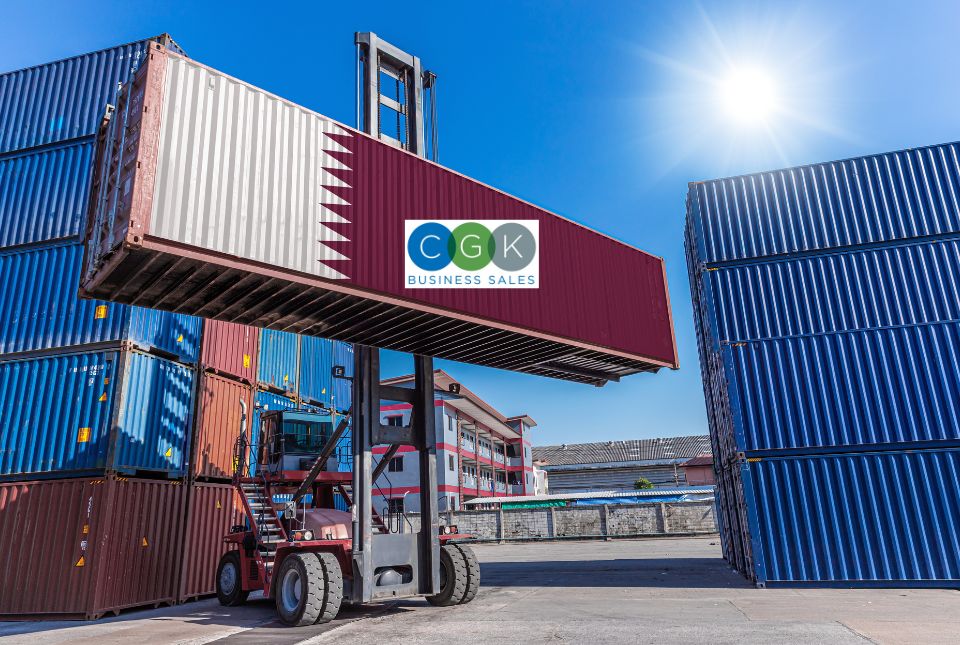
Tariffs and Small Business Valuations in 2026: How Tariff Whiplash Is Reshaping M&A
The impact of tariffs and small business valuations in 2026 has become one of the most urgent topics for business owners considering a sale, merger, or acquisition. At CGK Business Sales, we have watched a year of dramatic tariff reversals create both anxiety and opportunity in the lower and middle market. From the Supreme Court’s […]
Austin Office:
2720 Bee Caves Road
Austin, TX 78746
(512) 900-5960
San Antonio Office:
700 N Saint Mary's St
San Antonio, TX 78205
(210) 526-0094
Houston Office:
1200 Smith St
Houston, TX 77002
(713) 588-0240
Dallas Office:
325 N Saint Paul St
Dallas, TX 75201
(469) 998-1968
Phoenix Office:
40 N Central Ave
Phoenix, AZ 85004
(602) 714-7470
Colorado Springs Office:
102 S Tejon St
Colorado Springs, CO 80903
(719) 471-0115
Denver Office:
1600 Broadway
Denver, CO 80202
(303) 974-7978
Nashville Office:
424 Church St
Nashville, TN 37219
(615) 800-7118
Louisville Office:
312 S 4th St
Louisville, KY 40202
(502) 287-0332
Baltimore Office:
111 S Calvert St
Baltimore, MD 21202
(410) 777-5759
Washington DC Office:
1050 Connecticut Ave NW
Washington, DC 20036
(202) 888-6120

Business Broker Resources
Whether you are buying or selling a business in Nashville, our expert guides walk you through every step of the process:
CGK Business Sales Locations
Explore CGK Business Sales Across Our Locations
In addition to Nashville, CGK Business Sales provides expert M&A advisory and business brokerage services through our Louisville business brokers teams. Whether you're selling a business in Tennessee or expanding your search, our experienced brokers are ready to help.
Ready to take the next step? Learn more about selling your Nashville business with CGK.
Looking to acquire instead? Explore opportunities on our buying a business page.
Sell Your Nashville Business by Industry
We help Nashville business owners sell across a wide range of industries. Explore our specialized resources: