Baltimore Business Brokers Who Sit With You Before They Sell For You.
You have spent twenty, thirty, forty years building this. You know which lead foreman is putting two kids through Catholic school in Towson, which dispatcher routes the trucks across the Beltway before sunrise, which customer signed with you in 1998 and never went anywhere else. Selling your business is not a transaction question. It is a question about what happens to the people who trusted you, what your life looks like on the other side of the wire, and whether the timing serves the rest of the story you are still writing. Our Baltimore business brokers and M&A advisors sit with you in that decision before we run the process.
We love when you call, though we spend most of our time on the phone closing deals for owners like you. The form below is the fastest way to reach Greg Knox or Myres Tilghman directly. They reply within one business day, usually much sooner.
🔒 Strictly confidential. Direct routing to a named CGK Baltimore principal, not a junior screener. We never share inquiries with anyone.
“Most of the Maryland owners we sit with do not call us ready to sell. They call because something is changing, and they want to think it through with someone who understands both the financials and the part of the decision that does not show up in a spreadsheet.
We start there.”
A note from Greg Knox & Myres Tilghman · Baltimore Co-Leads, CGK Business Sales
Questions Maryland owners are asking themselves right now.
These are the questions that show up at four in the morning when you are not yet talking to anyone. Our Baltimore business brokers have heard each of them across fifteen years of Maryland engagements.
How Baltimore business brokers at CGK actually run a sell-side engagement.
A CGK engagement is a managed sale of your business, run by Greg Knox or Myres Tilghman, two senior named CGK principals who stay with you from the first phone call through the wire transfer. The engagement is built for Maryland businesses doing $1.5 million to $100 million in annual revenue. The five paragraphs below describe each stage from your side of the table.
Most owners interview two or three business brokers in Baltimore before deciding, and we encourage exactly that.
You get a senior named CGK principal, start to finish.
Greg Knox and Myres Tilghman are the two named CGK principals on every Baltimore engagement. Either one of them can lead the work, depending on the business and the chemistry with you. The person who sits with you at the first conversation is the same person who walks you through the valuation, writes the marketing document we send to qualified buyers, manages the buyer process, negotiates the Letter of Intent, and signs the wire instructions at closing. A Maryland business owner who has fielded calls from acquisition scouts can spot a junior salesperson within seconds. You will not get a junior salesperson on a CGK engagement.
We tell you whether and when to go to market.
The most valuable thing a Baltimore business broker can do is tell you when not to go to market. If the timing is wrong, we say so, and we mean it. If buyer activity in your industry is in a quiet stretch, we will tell you. If you need a few more months of strong financial performance before the business is ready, we will tell you that too. There is no pressure from our side to push you to market on a calendar that does not serve you well. If waiting is the right decision, we will back that decision, stay engaged with you in the meantime, and go to market when the moment is right. Disciplined judgment on the front end is half of why nine of every ten CGK engagements close, while the brokerage industry overall sits closer to two of ten.
We prepare your business for the buyers who will pay the most.
The Confidential Information Memorandum, or CIM, is the document we send to qualified buyers once they sign a non-disclosure agreement. It is a marketing document. Its job is to make the case for buying your business, without revealing the trade secrets that protect your negotiating position before a Letter of Intent is signed. The CIM describes your business at a high level: what you do, how big you are, who your customers are in broad terms, what your financial record shows, and where the growth opportunities are. It does not list your customers by name, name your key employees, share your contracts, or disclose the kind of detail a buyer will eventually need to see. Those items come later in the process, after the buyer has signed a Letter of Intent and committed real legal expense. We do not give that information away before then.
We run a competitive buyer process under strict confidentiality.
Confidentiality is the work of an M&A advisor, not a checkbox. CGK runs every Baltimore engagement under strict confidentiality from the first conversation through closing. We market your business through a one-page anonymous teaser that does not name the company. Every serious buyer signs a non-disclosure agreement before we send the Confidential Information Memorandum. Information is then released in stages, from the least sensitive to the most sensitive, on the cadence serious buyers expect from a structured process. We share enough information that buyers can feel comfortable making a strong offer. The most sensitive material, such as named customers and named employees, is held until the deal is well into the purchase agreement stage. In most cases, your employees, customers, suppliers, lenders, landlords, and competitors learn the business is in process only at closing. When a buyer needs to confirm that a few key people are staying through the transition, we push that conversation as close to closing as we can, after the buyer has committed serious funds to the deal.
We manage the deal from Letter of Intent through closing.
The other half of CGK’s high close rate is the work between the Letter of Intent and the wire transfer. After the LOI is signed, the buyer starts a detailed review of your business. We manage that review so the buyer’s questions get answered quickly, the financial details get organized, and the lawyers do not get bogged down in unnecessary back-and-forth. We hold the buyer to the terms of the Letter of Intent rather than letting the purchase agreement reopen the deal. We negotiate the escrow holdback so it reflects the actual risk of your business, not the buyer’s standard template. And we keep the buyer’s review team out of the way of your team, who are still running the business. This is the part of the engagement that most brokerages drop in the months between signing and the wire. We do not.
Start with a free Baltimore business valuation conversation.
Every CGK Baltimore seller relationship starts the same way. Greg Knox, CFA or Myres Tilghman sits down with you, in person at your business or by screen-share, and walks you through the model behind the price range your business is likely to clear in today’s Maryland buyer pool. The walkthrough is free. You leave with a verbal band, the list of levers that could lift the number, and a clear sense of the next step. There is no pressure to act, no commitment to engage, and no sales close at the end of the call.
What the free verbal Baltimore business valuation includes.
The free verbal walkthrough is exactly what it sounds like. The senior principal pulls up the valuation model calibrated to your specific Maryland industry. You see the methodology, the comparables, the multiples, and the math behind the number. You see where the levers are that would lift the price band before you take the business to market. The walkthrough is available to any Maryland owner seriously thinking about selling on any horizon, whether the horizon is a year, five years, or longer. Most of the strongest Baltimore engagements CGK has run started with this conversation eighteen months or more before the actual transaction. Written valuations are a separate, fixed-fee engagement covered in the paragraph below.
If you need a written Maryland business valuation memo.
If you need a written valuation memo to put in front of your CPA, your attorney, your spouse, your lender, a Maryland court, the IRS, or an ESOP trustee, the written engagement lives outside the sell-side mandate as a separate fixed-fee project. The deliverable is a defensible memo built on four independent valuation methodologies, with an executive summary written for the audience that will read it and a frank lever list of what could move the number before you take the business to market. Greg Knox, CFA leads the written work; the CFA charter is the institutional gold-standard credential for valuation defense, and it is the credential the memo is signed under. If you later engage CGK to sell, the written-memo fee credits against the sell-side success fee.
Why a CFA charterholder valuation matters when you sell in Maryland.
The buyer’s MBA-trained Principal is paid to chip down your price at the LOI stage. The Excel cell holding the EBITDA multiple is the cell he has been told to push on. Your defense in that conversation is not the broker’s confidence; it is the methodology, the comparables, and the analytical underpinning of the number that survives the pressure. A CFA charterholder leading the valuation work changes how that LOI conversation lands. Fewer than two hundred thousand CFA charterholders exist worldwide, and the overlap with anyone calling themselves a business broker is a rounding error. CGK is the rare Baltimore business brokerage where a CFA leads the analysis. The number we put in front of you is the number we will defend at LOI, and the number we defend at LOI is the number that ends up on the wire instructions.
Start with a confidential conversation.
A senior CGK Baltimore principal will respond within one business day to schedule a free verbal valuation, in person, or by screen-share. For Maryland owners with $1.5M+ in annual revenue. Strictly confidential. No commitment.
Confidential. No obligation. Direct routing to a named CGK Baltimore business broker, not a junior screener.
Buy a Maryland business with CGK Baltimore business brokers.
If you are running a search for the right Maryland or Mid-Atlantic acquisition, our Baltimore business brokers run a structured buy-side process to help you find the target, underwrite the deal, structure the financing, and close. CGK buy-side engagements are a separate mandate with separate compensation, and the firewall against representing both sides of any single transaction is absolute. The six points below describe how a CGK Baltimore buyer engagement actually runs. Exploring the market before committing to a search? Our guide to buying a business in Baltimore covers the buyer landscape end to end.
Businesses for sale in Baltimore, on the market and off it.
Serious buyers usually run the same search first: businesses for sale in Baltimore, then the wider Maryland listing sites. What shows up publicly is a fraction of what actually trades. CGK works both layers, the visible book of companies on the market across Greater Baltimore and the Baltimore-Washington corridor, and the off-market conversations our sell-side work keeps generating. When a business for sale in Baltimore, MD fits your criteria, capital, and timeline, you see a blind profile first and the fuller picture after an NDA, in the same staged sequence every serious process follows.
And if you landed here from the other side of that search, meaning you want to sell a business in Baltimore rather than buy one, the sell-side sections above walk through exactly how that engagement runs.
Senior named representation, not a junior screener.
Every CGK Baltimore buyer engagement is led by a named senior principal who stays with the engagement from thesis through close. Greg Knox, CFA and Myres Tilghman split the lead role across Baltimore engagements depending on the sector and the deal type. The same person you talk to at thesis development is the same person you talk to at LOI and at closing. CGK is one firm with eleven offices and a shared deal pipeline across all of them, so a Baltimore-based acquirer looking through our team sees the full national deal book, not just the local listings. Every CGK engagement rolls into a single cross-office pipeline. Franchise brokerages cannot share their pipeline this way; the franchise economic model penalizes the sharing.
Proprietary buy-side process for Maryland and Mid-Atlantic targets.
A CGK Baltimore buyer engagement runs the investment-banking process at lower-middle-market scale. Thesis development calibrated to your sector and check size. Target search across the cross-office pipeline plus the off-market relationships our team has built across years of work in the Maryland and Mid-Atlantic deal community. Financial diligence support during the buyer’s underwriting. Deal-structure work that protects the cap stack. Lender introductions across SBA, conventional senior debt, and mezzanine relationships. Closing coordination. We work with individual operator-acquirers, search funders, family offices, strategic acquirers, and lower-middle-market PE platforms looking for Maryland and Mid-Atlantic add-on acquisitions.
The CGK ‘Micro Private Equity Program’.
For acquirers who would rather have CGK as a long-term partner than a one-time advisor, our preferred buy-side structure trades the transaction fee for a small equity stake in the acquired platform. The economics are straightforward. More cash stays inside the business at closing. CGK takes real skin in the game alongside the operator. We continue working together to source add-on acquisitions and to bolt AI-powered operating tools onto the playbook through the years that follow. If you are open to CGK as a long-term equity partner on your acquisition, mention “Micro PE” in the buyer profile form to the right.
Off-market Maryland acquisitions through the ‘Micro Private Equity Program’.
Buyers inside the ‘Micro Private Equity Program’ also get visibility into off-market Maryland and Mid-Atlantic acquisitions sourced through CGK’s cross-office relationships and the pipeline our sell-side engagements are continuously building. Listed inventory plus off-market sourcing is the right combination for an acquirer who wants both structured representation on the visible book and a window into deals that never reach the public listing sites.
Buy-side and sell-side are separate engagements with separate compensation.
Buy-side and sell-side at CGK are distinct engagements with distinct fee structures, and the firewall against representing both sides of any single transaction is absolute. Sellers get full sell-side representation. Buyers get full buy-side representation. Franchise brokerages, where a single broker on a 1099 carries both a buyer and a seller in the same submarket, run inadvertent dual-agency risk constantly. We do not. Submit the buyer-qualification form to the right. CGK keeps a curated buyer list and reaches out when an active Maryland or Mid-Atlantic engagement aligns with your stated criteria, capital, and timeline.
Submit your buyer profile.
Your profile goes onto the CGK curated buyer list, and a senior Baltimore principal reaches out when an active Maryland or Mid-Atlantic engagement aligns with your criteria, capital, and timeline.
Confidential. No obligation. Direct routing to a named CGK Baltimore business broker.
From first Baltimore conversation to wire transfer.
A typical CGK Baltimore engagement runs six to twelve months from signed engagement to wire transfer. State contracting and healthcare deals tend toward the longer end because of state and federal approval steps that take time. Other deals can close faster. The six stops below describe the seller journey in the order you will experience it.
Selling an existing business is different from starting one: buyers pay for proof. CGK is a full service firm, and our mergers and acquisitions background shows most in how we run competitive processes across all types of businesses.
Confidential conversation
You call our Baltimore office or submit the form. The first thirty to sixty minutes are about you, your business, the people who work for you, and what is actually driving the question. We listen. By the end of the call, we have a clear sense of whether and when CGK is the right fit, and we tell you.
Free verbal valuation
Greg or Myres leads the conversation, in person at your business or by video call. You see the math behind the valuation: the comparable transactions we used, the multiples buyers in your industry are paying, and the price range your business is likely to clear. You leave with a verbal estimate of the range and a list of items that could lift the number before you go to market.
Engagement & prep
You sign a two-page engagement agreement. CGK only gets paid when the business sells, so there is no upfront fee. From there, we work with you to organize the financials and documentation a buyer’s team will want to see. Some businesses are ready to go to market right away. Others benefit from some cleanup first. Either way, we tell you the truth.
Going to market
We market your business with an anonymous one-page teaser, a Confidential Information Memorandum, and an organized data room. Buyers who sign a non-disclosure agreement get access to the CIM. Buyers who go further sign a Letter of Intent. The number of qualified buyers that show interest depends on your industry, but a structured competitive process consistently draws strong demand.
Letter of Intent and review
We negotiate competing Letters of Intent to terms that work for you, structure the escrow to reflect the actual risk in your business, and manage the buyer’s review so your team can keep running the business. The months between the Letter of Intent and the wire transfer are where most deals quietly fall apart. We do not let that happen.
Closing & wire
We close the deal: signed purchase agreement, funded escrow, wire transfer. The wire hits at a specific time on closing day. The transition to the new ownership is structured so the people you trained, hired, and mentored have the support they need going forward.
The industries anchoring the CGK Baltimore book.
Maryland’s economy spans more industries than most secondary metros. The Annapolis state-capital procurement book runs across MDOT, MAA, MDE, DOIT, MDH, DHS, and the broader eMaryland Marketplace contractor base. Hopkins-anchored healthcare and the UMMS, MedStar, and LifeBridge ecosystem follows. The Port of Baltimore logistics corridor, the Owings Mills and Hunt Valley financial corridor, the BWI federal-contracting belt, and the trades and home services book across Baltimore City, Baltimore County, Howard, Anne Arundel, Harford, and Carroll counties round out the Baltimore deal mix. CGK Baltimore engagements span both High Main Street and lower-middle-market bands.
Plus deal experience across 30+ industries. Don’t see yours? Our Baltimore business brokers have closed deals in almost every Maryland industry, including some very niche businesses.
Meet your Baltimore business brokers and the national bench behind them.
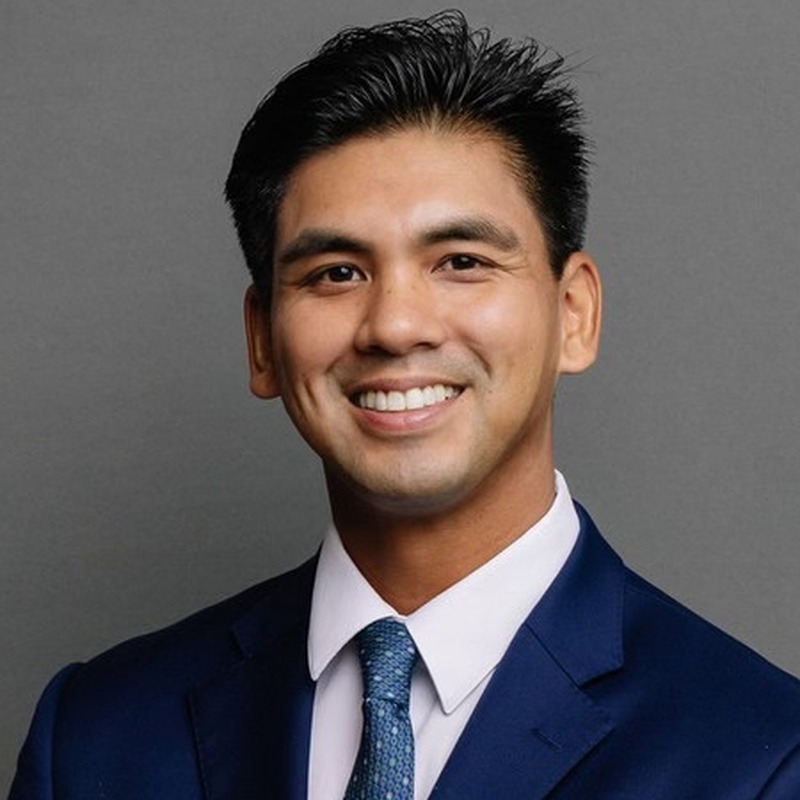
Two named principals anchor every Baltimore engagement: Greg Knox and Myres Tilghman. Either can be the lead on a given deal; the role is interchangeable depending on engagement, sector, and chemistry. Behind them sits the broader CGK Managing Director bench across the firm’s other offices, available on valuation analytics, M&A structuring, sector specialization, and buyer-side work whenever a Baltimore deal calls for additional firepower.
Baltimore, MD business brokers with institutional Wall Street training are rare; at CGK it is the baseline.







What Maryland and Mid-Atlantic owners say about CGK.
The process went very smoothly, and we closed in less than two months. It wouldn’t have happened without CGK’s insight, connections in the industry, and hard work. I wouldn’t hesitate to recommend them to anyone selling a business.
Hanna M.I worked with Greg from CGK Business Sales to gain a better understanding of a business I was considering buying. His approach was clear and organized, and he was able to explain some concepts to me in ways that made them easy to understand even though I did not have experience with the concepts before. Greg was professional, courteous, and knowledgeable every step of the way. I can’t imagine a better experience with an M&A advisor, especially compared with other Baltimore business brokers.
Becky DuranaGreg has a corporate background but decided to start his own business and do what he used to do for big consulting firms. So you get the best of both worlds: his experience and expertise with a very hands-on analysis and personal approach. Each step of the process went according to plan: the valuation of the business, the meetings, negotiations leading to the LOI, and then the journey toward the closing. Greg thrives for professionalism, rigor, and results.
BartlosI met with Greg last night. He went over and beyond to explain in full detail all aspects of how a business is valued. He responded in a very timely manner. Within two hours of uploading files I had a Zoom meeting with him and was given all of the information requested. Highly recommend CGK.
Laura BlizzardI am grateful for the assistance of CGK Business Sales in selling my business. They provided excellent service, were highly responsive, and helped me find the right buyer. I couldn’t be happier with the outcome.
Joanne D.The team at CGK Business Sales did an outstanding job in selling my business. They were professional, responsive, and worked diligently to find the right buyer. I highly recommend their services.
Josh F.Inside the Blueprint, on Bloomberg TV and Fox Business News.
CGK Business Sales was featured on Inside the Blueprint, the syndicated business television series. Our episode aired on Bloomberg TV and Fox Business News. We are usually the only Baltimore business brokers on a Maryland seller’s shortlist who can point to a Bloomberg appearance. Watch the segment, then start a confidential conversation with our Baltimore office.
Four Maryland owner stories, four CGK Baltimore engagements.
The four composite seller stories below sit inside the structural Maryland mix the way most CGK Baltimore engagements do: a Towson dental practice rolling into a PE-backed DSO, a Catonsville-based veterinary group going to a national vet consolidator, an Annapolis MBE-certified state contractor sold to a government services platform, and an Owings Mills independent insurance agency taken by a national broker consolidator. Names, locations, and identifying details are composited; the structural patterns are real. Each story shows what the engagement felt like from the seller’s seat.
How a Towson dental practice found a DSO buyer with the Baltimore business brokers who knew the bench was the asset.
Aisha is a second-generation Towson dentist. Her father built his practice on York Road in the 1970s and put her through the University of Maryland School of Dentistry. She joined the practice in 1998, took it over in 2008 when her father retired, and opened the second location in Pikesville in 2014 to absorb the patient overflow Towson could no longer schedule inside ninety days. By the time she called us, the combined practice was doing $3.4 million in revenue and ran fourteen operatories total: a Towson flagship at $2.2M (eight operatories, two GPs plus a part-time prosthodontist, three hygienist FTEs) and a Pikesville satellite at $1.2M (six operatories, one GP, two hygienist FTEs). The cosmetic mix and a multi-generational referral pipeline pulled SDE to $735,000, a 22 percent margin. Her son had just finished his pediatric dental residency at Hopkins and was opening his own practice in a different specialty in Howard County. Her husband had retired from federal service in 2024. She wanted to phase down the clinical week from four days to two and travel.
The first call was forty-three minutes. We did most of the listening. Aisha walked through the way her father still drove past the Towson office on his way to the Giant grocery store on Saturdays, the way the Pikesville staff had built their own local insurance-mix book that did not match Towson’s, the way her hygienist bench had quietly become the most stable part of the practice, and the way three different DSO consolidator scouts had been calling her quarterly for two years offering thirty-day closes. She did not know what the practice was actually worth at $735K SDE with the second location, the hygienist retention story, the cosmetic mix, and the multi-generational referral base. She did not know whether the DSO platforms calling her were the right kind of acquirer or whether a private dentist-buyer would treat her staff better. We told her what to expect from each band of buyer, then we set up a free valuation walkthrough.
The CGK Baltimore business brokers walked her through a valuation that showed the practice was worth meaningfully more than two of the three DSO scouts had been quoting and meaningfully less than the third had been dangling. The hygienist retention story (none of it on paper) was a value driver the buyer’s diligence team would want documented. The Pikesville insurance-mix book needed a clean trailing-eighteen-months breakout the bookkeeper had not been keeping in that shape. The cosmetic mix was a premium driver the right DSO would pay up for. We told her the truth: she could go to market now and accept a discount, or she could spend three months getting the hygienists onto two-year retention agreements, getting the bookkeeper to break out the per-location P&L and insurance-mix waterfall, and pulling the Pikesville lease into a renewal cycle that would survive a change-of-control. She went home and waited. Twelve weeks later, she called us back ready.
The CGK Baltimore business brokers took the practice to market in just over four weeks once she handed us the cleaned diligence file. Dental is a heavily-rolled-up industry and the buyer-pool depth showed it. Roughly 145 buyers signaled interest off the blind teaser. Eighty-eight signed NDAs to receive the full Confidential Information Memorandum. Eleven LOIs landed in the LOI window. The pool itself was the structural mix the dental industry tends to draw: a handful of HNW dentist-investors looking to acquire a flagship and add it to a regional book, a few search funders running a dental-platform thesis, a small group of independent sponsors, the heaviest concentration of bidders from mid-market PE platforms with explicit dental theses, several regional DSO consolidators rolling up the Mid-Atlantic, and one large national DSO strategic looking for a Baltimore-county anchor. Three LOIs advanced to a final round. Aisha picked the second-highest headline because the buyer (a PE-backed mid-Atlantic DSO running practices across MD, VA, and PA, sponsored by a New York lower-middle-market private-equity firm with an existing dental platform thesis) was committed to keeping both offices open under the existing brand, kept the hygienist bench together with comp-step protections, and gave Aisha a two-year clinical-advisor role at a day and a half per week. The deal closed structured as 82 percent cash at close with the remaining 18 percent as a seller note amortizing over five years at a market rate. Wire hit on a Thursday at 11:18 a.m. Aisha walked out of the Towson office, sat in her car in the parking lot, and called her father. He was at home in Lutherville. She told him the wire had cleared. He was quiet for a long second. Then he said, in the voice she had not heard him use since dental school graduation, that he was proud of her.
“I thought selling would feel like ending. It felt more like handing it forward.”
How an Annapolis MBE state contractor went to a government services platform with business brokers Baltimore teams who already knew the procurement rhythm.
Tasha started her firm in 2007 with one other person, after a decade as a program manager at the Maryland Department of Information Technology. Eighteen years later it was a firm of eighty W-2 employees with an MBE-certified Maryland state services contracting book covering IT services, facility operations, and professional services across multiple state agencies. The book is anchored by several multi-year recurring contracts with the Department of Budget and Management, the Maryland Department of Transportation, and the Maryland Department of Health, with the top three customers running roughly 22 percent of revenue combined. By the time she called us, the firm was doing $30 million in revenue at a 16 percent EBITDA margin (clean for a labor-and-pass-through state-services book), with $375,000 of revenue per head, anchored by a senior IT lead and a CFO she had hired during the 2018 growth cycle. Tasha had served on three corporate boards, was preparing to launch a foundation supporting African-American girls in STEM, and wanted to step out of the operating chair to focus on board work and the foundation full-time.
State-services M&A is structurally different from Main Street brokerage. The buyer pool is concentrated, the diligence is procurement-heavy, and the change-of-control mechanics on multi-year state contracts are not a footnote, they are the deal. Tasha had been approached six times in two years by PE-backed government services consolidators, twice by strategic acquirers, and three times by other MBE-certified firms looking for joint venture or roll-up structures. None of those conversations had walked her through what an MBE-status assignment actually requires under Maryland state procurement rules, or what a sophisticated buyer’s diligence team would price into the diligence file for the contract-performance-bond exposure on her largest two contracts. She called us because the senior IT lead had referred her after watching us run a different state-services engagement to close.
The first call ran sixty-eight minutes. We listened to Tasha tell the story from the 2007 founding through the current bench, the foundation she wanted to launch, and the conversations she had been having with her CFO about what the firm needed for her to be able to step out cleanly. We asked about MBE status, about the contract performance bonds, about the senior IT lead’s career trajectory, about the CFO’s appetite for staying through a transition. The valuation walkthrough showed her a band that respected the strategic value of the MBE certification to the right consolidator (an MBE-certified book is functionally non-substitutable inside a non-MBE platform’s bid universe). It also flagged what the diligence file would need: explicit change-of-control language on the two largest contracts, MBE-status-assignment opinion letters from her procurement counsel, and a buyer-grade contract-by-contract performance and renewal-probability schedule. She spent four months getting that done. The CGK Baltimore business brokers took the firm to market in late 2025.
State-services and govcon are popular industries in active rollup mode and the buyer turnout reflected it. Roughly 210 buyers signaled interest off the blind teaser. About 135 signed NDAs. Eighteen LOIs came in. The pool was the mix the industry tends to attract: HNW former-government-services-executive buyers running their own search efforts, a few search funders, a notable bunch of independent sponsors with govcon theses, the heaviest concentration of bidders from mid-market and lower-middle-market PE govcon platforms, several large national strategics (some PE-backed, some corporate), and several family offices with state-services theses. Three LOIs advanced to a final round. Tasha picked the highest headline because the buyer (a PE-backed mid-Atlantic government services consolidator with twelve other state-services platforms in its portfolio across MD, VA, NC, and DE, sponsored by a Boston upper-middle-market PE fund with an explicit state-services rollup thesis) committed to preserving the firm’s MBE-certified status under continuing-firm doctrine, kept the senior IT lead and CFO in named roles with multi-year retention agreements, and structured the rollover so Tasha could step out within ninety days while keeping economic exposure to the next four years of consolidator growth. The deal closed at 76 percent cash at close, 12 percent in a twenty-four-month escrow (longer than the standard twelve because of the MD state-contract performance bonds and the MBE-status assignment risk window), and 12 percent rolled forward as equity in the consolidator’s holding company. Wire hit on a Tuesday at 9:51 a.m. Tasha called her mother, a retired Baltimore City Public Schools teacher. Her mother was quiet for a moment. Then she said, in the steady matriarch voice the family knew, “I always knew.” Tasha drove in that afternoon and thanked the CFO and the senior IT lead in person.
“The deal that closes is the one where the MBE story holds up under a sophisticated buyer’s diligence team. Everything else is theater.”
How a Catonsville veterinary group sold to a national consolidator with the Baltimore business brokers who actually understood the bench.
Stavros’ parents emigrated from Thessaloniki in the 1970s and ran a Catonsville diner along Frederick Road for almost three decades. Stavros was the family’s first college graduate. He finished Penn Vet in 1991, opened his first small animal hospital in Catonsville in 1995, expanded to a second location in Ellicott City in 2004, and added a third location in Columbia in 2011. By the time he called us, the practice ran eighteen W-2 staff total: five DVMs, six RVTs, four vet assistants, and three receptionists and managers. The Catonsville flagship was AAHA-accredited and ER-capable, with 24/7 emergency capability, a full surgical suite, ICU, and six exam rooms. Ellicott City and Columbia were three-exam-room satellites with no ER and no ICU. Combined revenue was $5.6 million across the three locations (a $1.87M average per shop) at a 26 percent EBITDA margin (high for vet but achievable for an ER-capable AAHA-accredited multi-location). The bench had a long-tenured Salvadoran-American lead surgical tech named Maria who had been with him since 2007.
Stavros’ daughter Niki had chosen human medicine and was a Hopkins ER physician. His other daughter Sofia taught biology at Catonsville High. Neither was taking the practice. Stavros had a back surgery in 2024 that had quietly made the long surgical days harder than he was admitting to his family. He had been approached eleven times in eighteen months by national vet consolidator scouts. Two had quoted him quick numbers over the phone. One had flown a regional director up from Charlotte to sit with him at the Catonsville flagship. None of them had asked about Maria. None of them had asked about the two DVMs he had brought up from Penn Vet residencies. None of them had asked what the AAHA accreditation cost the practice in operating discipline or what it bought in referral pull. He called us the morning after the regional director from Charlotte left town.
We listened first. We asked about Maria, about the two DVMs, about the AAHA accreditation cycle, about the way the ER capability at the Catonsville flagship pulled overflow from competing Baltimore County and Howard County practices that did not run their own ER. We asked what he wanted his weeks to look like in three years. The valuation walkthrough showed him a multiple band that surprised him on the upper end. The AAHA accreditation, the ER-capable flagship, the bench depth across the five DVMs, and the long-tenured surgical-tech and front-desk continuity were premium-multiple drivers a sophisticated PE-backed consolidator’s deal team would pay up for. The thing dragging the number down was the way the three locations consolidated into a single P&L; the buyer’s diligence team would want shop-by-shop financials with comp normalization. He spent ninety days getting the bookkeeper to pull location-level revenue, gross margin, doctor productivity, and client-retention breakouts for the trailing thirty-six months. He got Maria, the two Penn Vet hires, and the two longer-tenured DVMs onto formal three-year retention agreements with stay arrangements. Then the CGK Baltimore business brokers took the practice to market.
Vet has been in heavy PE consolidation for almost a decade and the buyer-pool depth showed it. Roughly 178 buyers signaled interest off the blind teaser. About 112 signed NDAs. Fourteen LOIs landed. The pool was the structural mix the vet industry tends to draw: a small group of HNW vet-investor buyers, a few search funders, several independent sponsors, the largest cohort from mid-market PE vet platforms (vet has been in heavy PE consolidation for years), several family-office vet platforms, large national strategic consolidators, and one strategic acquirer with operations across the Mid-Atlantic. Five LOIs advanced to a final round. Stavros picked the third-highest headline because the buyer (a PE-backed national vet consolidator with a Mid-Atlantic regional brand, AAHA-aligned, with a portfolio of more than 200 practices nationally and an explicit acquisition thesis around suburban ER-capable hospitals, sponsored by a Chicago upper-middle-market PE platform) ran a satellite-brand preservation thesis that kept acquired practices under their existing name, kept the AAHA accreditation cycle intact at the flagship, and gave both Penn Vet hires regional medical-director runways. The deal closed at 80 percent cash at close, 8 percent in a twelve-month escrow for general indemnity, and 12 percent rolled as equity in the consolidator’s holding company. Wire hit on a Friday at 10:32 a.m. Stavros walked out to the Catonsville flagship parking lot and called his elderly mother in Thessaloniki in Greek. Then he drove back inside, found Maria in the surgical prep room, and thanked her in person for nineteen years.
“I needed a buyer who would ask about Maria first. The number came after that.”
How an Owings Mills independent insurance agency sold to a national consolidator with Baltimore business brokers who priced the book correctly.
Elena is the second generation. Her father Giovanni opened the agency in Little Italy in 1972 with two carriers and a single commercial-lines binder. He moved the practice to Owings Mills in 1989 as the Baltimore County financial corridor grew up around Reisterstown Road. Elena joined in 1989 right out of the University of Baltimore, took over from Giovanni in 2002, and ran the agency for the next twenty-three years. By the time she called us, the agency wrote a $1.2 million property-and-casualty book at $300K of revenue per head across four staff (Elena, two producers, one admin), about 65 percent commercial (Baltimore mid-market manufacturers, contractors, distributors) and 35 percent personal lines (the multi-generational Romano-family book that had been moving from Little Italy out to the Baltimore County suburbs over five decades). The top three carriers (Travelers, Erie, and Selective) represented roughly 60 percent of placed premium. SDE ran $355,000, a 30 percent margin clean for an independent commercial-heavy book. The longtime account executive Patricia had joined in 1998.
Elena’s son Marco was a structural engineer in Towson. Her daughter Isabella was a museum curator in Washington. Neither was taking the agency. Her husband Anthony retired from his federal financial-services role in 2024 and they wanted extended time at the family home in Calabria. Elena had been approached fourteen times in two years by national broker consolidators and two regional Mid-Atlantic broker rollups. Two had walked her through quick valuation ranges over the phone. None of them had explained how they would structure the carrier-assignment workflow on her commercial book or what the E&O claims window would look like inside a broker consolidator’s standard purchase agreement. She called us because Anthony had retired and the kitchen-table conversation in their Owings Mills home had finally turned from “someday” to “this year.”
Insurance agency M&A is its own structural pattern. The valuable asset is the book, the producer relationships that maintain it, and the carrier-assignment continuity through the change of control. Multiples cluster tighter than they do in dental or veterinary M&A because the book itself is the thing being underwritten and the producer compensation rolls forward in a predictable structure. Smaller P&C agencies in Elena’s tier typically transact on a cash-and-seller-note basis rather than the cash-plus-rollover structure that dominates larger insurance broker deals. The CGK Baltimore business brokers walked Elena through her band, the producer-retention framework she would need, and the carrier-by-carrier change-of-control conversation she would need to have with her two largest commercial carriers before going to market. She took ten weeks. She got Patricia and the other senior producer onto two-year retention agreements with comp-step protections. She had the carrier conversations. She pulled the bookkeeper into a clean producer-by-producer book breakout. Then the CGK Baltimore business brokers took the agency to market.
Independent agency rollup is a moderately popular industry and the smaller-tier book attracted a moderate-depth pool. Roughly 78 buyers signaled interest off the blind teaser. About 42 signed NDAs. Four LOIs landed. The pool was the structural mix the smaller-agency tier tends to draw: a small group of HNW agency-investor buyers, a few search funders, a couple of independent sponsors, the heaviest concentration from mid-market PE insurance broker rollups, and a couple of regional independent agency consolidators. All four LOIs advanced to a final round at Elena’s tier. Elena picked the second-highest headline because the buyer (a PE-backed insurance broker consolidator with a Mid-Atlantic focus, two hundred agencies in their existing platform, sponsored by a private-equity-backed national broker rollup) ran a satellite-brand preservation thesis that committed to keeping the agency under the Romano name on the Owings Mills storefront, kept Patricia and the other senior producer at their existing comp tier, and gave Elena a one-year transition consulting role at one day per week. The deal closed structured as 78 percent cash at close with the remaining 22 percent as a seller note over three years at a market rate, sized to make the cash component large enough to anchor Elena’s retirement plan while keeping a meaningful continuity incentive on Elena and Patricia through the transition. Wire hit on a Wednesday at 2:07 p.m. Elena called Anthony from the Owings Mills parking lot in Italian. “E fatto, amore mio.” It is done, my love. She drove back inside the agency and thanked Patricia in person for twenty-seven years of being the institutional memory of the practice.
“I did not know how to walk out of the building Patricia had run with me for twenty-seven years. The seller-note structure made it possible to walk out slowly.”
If any of these stories sound like you, start with a free Baltimore business valuation.
The composites above are different industries, different sizes, different deal structures. They are the same engagement, run the same way, by the same two named CGK Baltimore principals. The first conversation is free. The verbal valuation that follows is free for any Maryland owner seriously thinking about selling on any horizon: a year, five years, longer.
Confidential. No obligation. Direct routing to a named principal.
Talk to a CGK Baltimore Business Broker
A senior CGK Baltimore principal will respond within one business day. For Maryland owners with $1.5M+ in annual revenue.
The buyer pool the Baltimore business brokers at CGK actually run process for.
The number of qualified buyers we can reach is one of the biggest reasons CGK’s close rate runs nine of ten. Greater Baltimore draws a deeper buyer pool than its population alone would suggest. Maryland state government contracting in Annapolis, the Hopkins and UMMS healthcare ecosystem, the Port of Baltimore, and federal work tied to Fort Meade and Aberdeen all attract specialized buyers who actively look for Maryland businesses.
Private equity firms that buy state government contractors. Maryland state government procurement, through systems like eMaryland Marketplace Advantage and contracts run by MDOT, DGS, and DOIT, attracts a recurring set of private equity firms that specialize in buying companies that serve state agencies. These firms reach out regularly to Maryland IT services firms, engineering firms, environmental contractors, and staffing companies that hold State of Maryland prequalification. When CGK takes a Baltimore state-contracting business to market, the buyer pool already understands the procurement environment.
Federal IT firms expanding into Maryland state work. Large federal IT firms such as Leidos, Booz Allen Hamilton, SAIC, CACI, ManTech, Maximus, and Peraton actively acquire Maryland companies that hold both State of Maryland and federal contracts. The ability to bridge between the two procurement systems is genuinely valuable to these acquirers. The Fort Meade and Aberdeen area also draws private equity firms that buy security-cleared service providers, including managed service providers, training and simulation companies, and defense electronics manufacturers.
Private equity firms focused on healthcare around Johns Hopkins and UMMS. The healthcare M&A market in Baltimore runs deeper than the metro’s population would suggest, because of the gravity of Johns Hopkins, the University of Maryland Medical System, MedStar Health, LifeBridge, Mercy, and GBMC. Private equity firms that focus on healthcare reach out regularly to Maryland medical practices, dental groups, home-health agencies, behavioral health companies, and ambulatory surgery centers. Hopkins and UMMS alumni who have moved into operator and investor roles are also common buyers, often bringing operating discipline that purely financial buyers cannot match on day one.
Family offices and high-net-worth individuals across the Mid-Atlantic and Baltimore region. Brown Advisory clients, alumni of T. Rowe Price, and the broader wealthy population across Roland Park, Mount Washington, Greenspring Valley, and Hunt Valley include a number of family offices that buy businesses for the long term. Family offices typically hold their acquisitions for decades, which makes them a different kind of buyer than private equity. Recent MBA graduates from Wharton, Cornell, Darden, and the University of Maryland Smith School often search for their first acquisition in the Baltimore-DC corridor, drawn by the local business schools and the volume of state and federal contracting work.
Port of Baltimore strategic acquirers, distribution roll-ups, and home services and insurance buyers. The Port of Baltimore and Tradepoint Atlantic at Sparrows Point attract maritime services companies and distribution firms looking to expand across the Baltimore-Washington-Philadelphia region. Mid-Atlantic regional acquirers and private equity firms run an active roll-up of plumbing, HVAC, electrical, roofing, and other home services businesses across Baltimore City, Baltimore County, Howard, Anne Arundel, Harford, and Carroll counties. The independent insurance agency roll-up across Maryland has been active since 2018 with no sign of slowing, with regional insurance buyers reaching out monthly to Maryland agencies that meet their revenue threshold.
Greater Baltimore submarkets we serve.
Maryland is not one market. The CGK Baltimore book runs across these twelve submarkets and the sectors that anchor each. Greg and Myres run engagements in every one.
Preparing to sell your Baltimore business.
The work that happens between deciding to sell and going to market is what determines your sale price. Most of it is invisible to the seller until the buyer’s review team starts asking specific questions about your financial records, your management team, your customer concentration, and your regulatory standing. The right time to do this work is twelve to twenty-four months before your target closing date. The wrong time is the sixty days before going to market.
Twelve to eighteen months before your target closing date. This is the window where preparation work pays off most. Gaps in documentation that would lower a buyer’s offer get identified and addressed. Financial records start being kept in the shape a sophisticated buyer’s review team can read at a glance. Some of the more nuanced situations, such as customer concentration, regulatory matters specific to your business, or questions about who will run the business after you leave, get thought through carefully. None of this work fits comfortably into a sixty-day pre-market scramble.
When the business is ready, not when the calendar says. Buyers look hard at the most recent period of revenue and earnings, and the strongest offers come when the business is showing a clean, growing record with stable margins. If your business is in the middle of a major change, such as a contract renewal, a regulatory cycle, an integration of a competing acquisition, or a significant operational change, the right decision is often to wait until things settle. We will back that decision and stay engaged with you in the meantime. Pushing through an unsettled stretch to meet an arbitrary deadline almost always costs more than the wait would.
Once the business runs without you in the room. The most expensive issue a buyer’s review uncovers is the realization that the owner personally holds together the customer relationships, the regulatory relationships, the supplier relationships, or the key referral sources. Buyers discount the price meaningfully when they see that risk. The fix is to put trusted people in front of those relationships, document the handoff, and give the relationships time to settle. Once the buyer sees a management team that runs the business without the owner present, the discount goes away.
Once the tax and estate planning is done. A larger Maryland sale almost always has tax options the seller does not see until they are inside the Letter of Intent process. These can include the choice between selling stock and selling assets, the use of certain corporate restructures, Maryland state tax considerations, installment sales, charitable trust structures, and Employee Stock Ownership Plan options. A Maryland business owner who goes to market without the right tax and estate work in place can leave a significant amount of money on the table at closing. A tax attorney, trust attorney, and CPA engaged twelve months ahead of closing more than justify their cost at the time of the sale.
Owners who take the time to prepare tend to hit the strongest sale prices. Owners who compress the work into a sixty-day rush before going to market learn what a discounted offer looks like in real time. Either way, our Baltimore business brokers will tell you the truth about which path applies to your situation. The truth-telling, more often than not, is the work.
When to call a Baltimore business broker.
Five situations come up most often in the first conversation a Baltimore business owner has with us. The pattern holds across industries, deal sizes, and locations. If you recognize one of these moments in your own situation, the right time to call is before the moment forces a worse decision.
You are getting unsolicited calls. Someone has been calling about your business. Maybe it is a private equity firm, a larger competitor, or an investor who buys companies of your size. The conversation has moved past pleasantries into specific numbers. You do not know whether the number they are mentioning is a real offer, a low anchor designed to set a ceiling, or simply a way to put you on their list for future outreach. This is the moment to call our Baltimore office, before you sign anything, while you still have leverage.
The unsolicited buyer is not your friend. The unsolicited buyer is a sophisticated counterparty whose job is to acquire your business at the lowest price they can justify. The instinct most sellers feel is to skip the broker fee because they “already have a buyer.” That instinct routinely costs millions on a sale of any size. Every CGK Baltimore engagement runs the unsolicited buyer in parallel with the competitive process, and the original suitor consistently lands in the lower half of the offers on both price and terms. The pressure of a structured process is what closes the gap between the unsolicited offer and what your Maryland business is actually worth.
The succession question has resolved. Your son or daughter finished a graduate program in a different field and is not coming back to the business. Your second-in-command has decided to start something of their own. The family conversation about who takes over the business has landed, and the answer is not a family member. Succession is the most common reason a Maryland owner-operator picks up the phone. The moment the succession answer becomes clear is usually the right moment to start a conversation, even if the actual sale is twelve, eighteen, or twenty-four months away.
You want to sell from a position of strength, not stress. The last twelve months are the strongest the business has ever recorded. The team you have built is the deepest it has ever been. The customer base, the contract backlog, the patient list, or the recurring revenue is the cleanest it has been in years. This is exactly when buyers pay the highest prices, and exactly when most owners hesitate, because the business is finally running well and selling at the peak feels counterintuitive. It is not. The Baltimore industries we know best, including Maryland state contracting, healthcare, distribution, professional services, trades, and home services, all pay their strongest prices when the seller’s most recent twelve months of performance are at a peak. Waiting through a softer cycle for sentimental reasons costs real money.
A health, family, or partnership change has shifted the horizon. A back surgery. A partnership disagreement. A spouse’s career move, retirement, or relocation. A new family medical situation. The “someday” horizon got shorter, and the question of what to do is now sitting on the kitchen table. Our Baltimore business brokers work confidentially through these conversations and have done so across most of the situations a Maryland owner faces. The conversation is private. There is no pressure to act on a calendar that is not your own.
You want to know what your Maryland business is actually worth. No pressure to sell, and no commitment to any path. The valuation walkthrough is free for any Maryland owner seriously thinking about a sale on any horizon, whether that horizon is twelve months, five years, or longer. Many of the strongest CGK Baltimore engagements started with this conversation a year or more before the actual transaction. A meaningful number of those conversations ended with us telling the owner that the right decision was to wait. The deal will be there when the answer changes.
Recognize any of these triggers?
Start with a confidential conversation. A senior CGK Baltimore principal will respond within one business day to schedule a free verbal valuation, in person, or by screen-share.
Confidential. No obligation. Direct routing to a named CGK Baltimore principal, not a junior screener.
Frequently Asked Questions
Practical answers to what comes up most often when Maryland owners are evaluating Baltimore business brokers to take their company to market.
We Know Baltimore.
Baltimore is the row houses of Federal Hill and Fells Point, the Mount Vernon brownstones along the Washington Monument, the Hampden bricks along The Avenue with their painted screens, the Bolton Hill turrets, and the Pigtown blocks that built the railway era. CGK’s Maryland address is 111 S Calvert Street, Baltimore, MD 21202, ten blocks from the Inner Harbor and three from the federal courthouse, but most of our work with Baltimore owners happens at the seller’s business or by Zoom.
The best Baltimore business brokers earn their fee twice, once in the price and once in the terms.
We know the Hopkins-anchored healthcare cluster pulls a deeper specialty-practice M&A market into Baltimore than the city’s population alone would suggest. We know the Maryland Department of Commerce tracks the federal services and life-sciences cluster the way Texas tracks oil, and we know Maryland Chamber of Commerce data on owner demographics shows a Baltimore-area Boomer-business succession wave compounding since 2018. We work the Greater Baltimore deal market alongside the convening work of the Greater Baltimore Committee.
We know Baltimore is bourbon at Sagamore Spirit on Port Covington and crab cake at Faidley’s at Lexington Market, Orioles at Camden Yards on a Tuesday night and Ravens at M&T Bank Stadium on a Sunday in November, the Charles Theater marquee, the MICA studios in Bolton Hill, the Walters galleries, and the working Port that runs containers to the Mid-Atlantic interior. We know the row-house corner stores in Highlandtown and Greektown, the South Baltimore breweries, the family delis in Pikesville, and the Smith Island cake bakeries that ship Maryland’s official state dessert across the country.
We are members of the International Business Brokers Association (IBBA) and M&A Source. We carry a CFA, a CMT, a CAIA, an FDP, an MBA, and a Master of Data Science. If you are a Maryland owner thinking about how and when to sell your business, or hunting for the right Mid-Atlantic acquisition through our buy-side advisory, or want a confidential business valuation, our Baltimore business brokers know this city and the Maryland buyer pool. Call (410) 777-5759 or submit the form to start.
Latest from the CGK blog.
Recent commentary on selling, buying, and valuing privately-held businesses, fresh from CGK and our Baltimore business brokers bench.

AI productivity tools are quietly compressing operating cost lines and re-shaping the multiples sophisticated buyers are willing to pay. Owners going to market in 2026 need to understand how a buyer’s deal team prices the AI lift before signing an LOI, because the valuation gap between AI-mature and AI-naive businesses is widening fast. […] Read More

Stock vs. asset structure, F-reorganizations, QSBS eligibility, installment-sale considerations, and state-tax allocation can each shift net proceeds by tens of thousands or more. The 2026 update walks privately-held owners through the structuring decisions that have to be made twelve months before close, not at LOI. […] Read More

SBA 7(a), conventional senior debt, mezzanine, seller notes, rollover equity, and earn-outs each carry different cost-of-capital, covenant, and risk profiles for the buyer. The post breaks down how each layer interacts with the seller’s preferred structure and where most first-time acquirers misprice their cap stack. […] Read More
Start with a confidential conversation. No commitment.
Submit a brief profile and a senior CGK Baltimore principal will reach out within one business day. The first conversation is always free, and the verbal valuation that follows is free for any Maryland owner seriously thinking about selling on any horizon.
Strictly confidential. No pressure. Direct routing to a named CGK Baltimore principal, not a junior screener.
Talk to a CGK Baltimore Business Broker
A senior CGK Baltimore principal will respond within one business day. For Maryland privately-held companies with $1.5M+ in revenue.
Or scroll up to the seller-profile form in any of the three valuation blocks above. Direct routing to Greg Knox or Myres Tilghman, not a junior screener.
Confidential. No obligation.
Sell your Baltimore business by industry vertical.
CGK Baltimore business brokers serve owners across healthcare, Maryland state contracting, distribution, IT services, and professional-services industries. Each industry has its own diligence cadence, buyer pool, and value-driver story. Click any card below to see the playbook for your industry.
Medical Practices
Sell a Baltimore medical practice with payer-mix, clinical-credentialing, and Stark Law diligence inside the Johns Hopkins and UMMS ecosystem.
Visit pageState Contracting
Sell a Maryland state-contracting business with eMaryland Marketplace prequalification, MBE or DBE assignment, and agency-by-agency contract diligence.
Visit pageDistribution
Sell a Baltimore distribution business with Port of Baltimore logistics, customer-concentration, and working-capital diligence.
Visit pageMSP and IT Services
Sell a Baltimore MSP or federal-adjacent IT services business with cleared-headcount, recurring-revenue, and federal-agency-pipeline valuation discipline.
Visit pageLaw Firms
Sell a Baltimore law firm with active-matter, partner-retention, and hourly-versus-contingency revenue diligence.
Visit pageAccounting Practices
Sell a Baltimore accounting or CPA practice with recurring-revenue, partner-retention, and Mid-Atlantic federal-agency-client diligence.
Visit pageCGK has offices across the country.
Whichever office you reach, you get the entire firm. Click any city to learn about that local market, or click the business broker page link to see the local broker landing.
Colorado Springs, CO 80903