
Baltimore Business Brokers
Baltimore Business Brokers Serving All of Maryland
Baltimore business brokers and M&A advisors for Maryland owners. We sell businesses with $1.5M or more in revenue, confidentially, with a 90%+ close rate.

Sell a Business in Baltimore, MD
Selling a business in Baltimore is not the same conversation as selling a house, and it is not the same conversation as accepting the first unsolicited offer that lands in your inbox from a competitor or a private equity associate. It is a structured, confidential process that runs across months, often involves dozens of serious bidders, and ends with a transaction designed to protect what you built rather than just move the asset off your balance sheet. Our Baltimore business brokers run that process the way large investment banks run larger deals: tight intake, defensible valuation, blind marketing, qualified buyer outreach, and a quarterbacked close.
Greg Knox personally leads our Baltimore practice as Managing Principal, with Myres Tilghman serving as second on every engagement we sign across Baltimore City, Baltimore County, Howard County, Anne Arundel County, Harford County, and Carroll County. The team carries direct relationships across the broader Mid-Atlantic buyer network, including the strategic acquirers, private equity firms, and family offices that show up most often as bidders on Maryland businesses in our size range.
The CGK Baltimore practice deliberately turns down most of the brokerage engagements we are pitched. We work businesses generating $1.5M to $100M in annual revenue, or $300K to $10M in Seller's Discretionary Earnings/EBITDA, and we say no to companies above and below that band, plus to companies inside the band that we do not believe we can actually close on defensible terms. The discipline shows up downstream: more than nine of every ten engagements we sign close, against a brokerage industry average closer to two of every ten. Two things explain that gap. The front-end filter keeps us from taking on engagements that were never going to close. Once engaged, the way we package the company, structure the buyer process, negotiate the LOI, and quarterback diligence is what holds the deal together through close. Both halves are necessary, and neither is sufficient on its own. Working with experienced Baltimore business brokers who specialize in this middle band, instead of generalists who try to cover everything from Main Street to Wall Street, is what gives the closing rate its bite.
That track record drew the attention of the national television show Inside the Blueprint, which recently profiled the CGK process and how we work with owners through a real, defensible business sale. The segment is right below.

CGK Business Sales was recently featured on the television show:
Inside the Blueprint
CGK was recently featured on the national television program Inside the Blueprint, which profiles distinctive professional services firms across the country. The segment walks through how the CGK team approaches business sales for High Main Street and lower-middle market owners: confidential intake, defensible valuations, structured buyer outreach, and a quarterbacked diligence process that protects the seller from LOI through close. The video is to the left. Once you have watched it, the natural next step is a free, no-obligation valuation conversation with our Baltimore business brokers.
What Business Owners in Baltimore, Maryland Say About CGK Business Sales
"I could not be happier with the experience I had selling my business with CGK. Greg did a detailed analysis of my business and helped me price and position it right for the market. After receiving multiple offers at full asking price the rest of the process went very smoothly, and we closed in less than two months. It wouldn't have happened without CGK's insight, connections in the industry, and hard work. I wouldn't hesitate to recommend them to anyone selling a business.”
— Hanna M.
“Greg has a corporate background but decided to start his own business and do what he used to do for big consulting firms. So you get the best of both worlds: his experience and expertise with a very hands-on analysis and personal approach. Each step of the process went according to plan: the valuation of the business, the meetings, negotiations leading to the LOI, and then the journey toward the closing. Greg thrives for professionalism, rigor, and results."
— Bartlos
“I worked with Greg from CGK Business Sales to gain a better understanding of a business I was considering buying. His approach was clear and organized, and he was able to explain some concepts to me in ways that made them easy to understand even though I did not have experience with the concepts before. Greg was professional, courteous, and knowledgeable every step of the way. I can't imagine a better experience with an M&A advisor, especially compared with other Baltimore business brokers."
— Becky Durana
“I met with Greg last night. He went over and beyond to explain in full detail all aspects of how a business is valued. He responded in a very timely manner. Within two hours of uploading files I had a Zoom meeting with him and was given all of the information requested. Highly recommend CGK."
— Laura Blizzard
“"I am grateful for the assistance of CGK Business Sales in selling my business. They provided excellent service, were highly responsive, and helped me find the right buyer. I couldn't be happier with the outcome."
— Joanne D.
“The team at CGK Business Sales did an outstanding job in selling my business. They were professional, responsive, and worked diligently to find the right buyer. I highly recommend their services."
— Josh F.
Get a Free Valuation
Most owners who reach out to us are not yet decided about a sale. They want to know what their company would actually be worth in today's Baltimore market, what changes might push the number higher over the next 12 to 24 months, and what a real sale process with experienced Baltimore business brokers would look like if and when they decide to run one. The conversation is free, the valuation work is confidential, and nothing you share leaves our team. Send the basics through the form below and Greg or Myres will be in touch within one business day.
Our unique selling process is tailored for businesses with at least $1.5 million in revenue (up to $100 million) and $300,000 to $10,000,000 in owner’s profit.

When to Call Baltimore Business Brokers
There is no perfect time on the calendar to start the conversation about a business sale, but there are specific situations where waiting another year is the most expensive option you can pick. The three most common we see across Maryland:
The first is the unsolicited approach. A competitor, a private equity associate, a strategic acquirer with operations across the Mid-Atlantic, or a representative of a regional family office reaches out unannounced and asks whether you would consider selling. Almost every owner's first instinct is to either dismiss the inquiry as a fishing expedition or take the conversation directly. Both reactions cost real money. Dismissing it ignores genuine market interest at a moment when you have leverage. Engaging directly without representation puts you across the table from a buyer who knows there are no other bidders, which always anchors the eventual price below what a structured competitive process would have produced. The right move is to acknowledge the inquiry politely, then immediately call a broker to put a real process around the conversation. Most of our most-rewarded Baltimore engagements started exactly this way.
The second is the personal trigger. A health scare in the family, a partner indicating they are ready to retire, a child who once might have inherited the company deciding to pursue a different career, an unexpected divorce or estate question, or simply the gradual realization that running the business is no longer the highest and best use of your remaining working years. These triggers do not announce themselves on a schedule, but every one of them shortens the runway between today and the day a sale would need to close. The earlier the conversation starts, the more options exist for structuring an exit that protects both the sale price and the post-close transition. Owners who wait until the trigger has already arrived almost always end up with a tighter timeline, a thinner buyer pool, and a worse outcome.
The third is the business-performance window. Buyers pay the highest multiples for companies that are growing, profitable, well-documented, and visibly less dependent on the owner than they were three years ago. If your Baltimore business is currently in that window, with another quarter or two of clear runway ahead, the conversation should be happening now. Selling from strength produces meaningfully better outcomes than selling at the first sign of plateau or decline, and the buyers who pay the highest prices are specifically looking for businesses that are still on the upswing rather than already past the peak.
Any one of these three scenarios is enough to justify an initial call. None of them obligate you to anything. Our Baltimore business brokers will spend an hour with you, give you our honest read on the situation, and tell you whether we think the timing is right or whether we think you should wait. Either answer is valuable. Call (410) 777-5759 or send a note through the valuation form above to start that conversation.
Ready to Talk About Your Business Exit?
How a Baltimore Business Broker Helps You Sell
The work of selling a business breaks into five distinct disciplines, each of which can move the eventual sale price by a meaningful percentage. The way our Baltimore business brokers handle each one is what separates a brokerage process that closes at the right number from one that drifts to a discount or doesn't close at all.
- Defensible Valuation. Every CGK Baltimore engagement begins with a CFA-anchored valuation built on three independent lenses: recent M&A comparables in your sector, an EBITDA or SDE-based earnings analysis, and a working-capital and balance-sheet review. The number we put on paper has to defend itself when a buyer's analyst tries to renegotiate it down at LOI. Soft valuations become the ceiling on the deal; defensible ones become the floor.
- Confidential Marketing and Packaging. Once you engage, we build the materials a serious buyer needs to make a serious offer: a blind teaser that protects your identity, a full Confidential Information Memorandum, and a structured data room. Every piece of material is sanitized so that competitors, employees, and customers cannot identify your company until you decide they should.
- Competitive Buyer Outreach. We run a structured outreach campaign across four buyer categories at the same time: strategic acquirers, private equity platforms, search funds and independent sponsors, and high-net-worth or family-office buyers. Multiple buyer types in the room is the only mechanism that pushes a price above the seller's asking number, because competitive tension is what produces above-market offers.
- LOI and Deal Structure Negotiation. We negotiate the Letter of Intent on your behalf and structure the deal terms underneath the headline price: working-capital peg formula, escrow holdback, earn-out triggers and definitions, seller note terms, indemnification scope and caps, and rollover-equity percentage where applicable. The headline number gets the press; the structure determines what actually clears into your account at close.
- Diligence and Close. From signed LOI to wire transfer, we quarterback an eight-to-twelve-week diligence process across financial, legal, tax, and operational workstreams. We coordinate the buyer's team, the lawyers on both sides, your accountant, and any specialty advisors, so you can keep running the business right up to the day the wire hits your account.

Baltimore Business Valuations
Many of the calls we take in Baltimore start with the same disclaimer: "I am not necessarily ready to sell." That is exactly the right time to ask what your business is worth. Owners who wait until they are decided about a sale almost always lose the optionality that comes from knowing the number 18 months earlier. The valuation conversation costs you nothing, locks you into nothing, and gives you a real benchmark you can plan against.
Valuing a business is not the same exercise as valuing a piece of real estate. Real estate has comparable square footage, recent sale prices a few blocks over, and a relatively narrow band of variables. A business has goodwill, customer concentration, owner dependence, regulatory positioning, sector tailwinds, and dozens of less obvious factors that all influence what a real buyer will pay. Most of the value also has no physical form, which is why a typical "business appraisal" from a generalist often misses 20% to 40% of what the right buyer would actually pay.
Greg Knox personally signs off on every valuation we produce, bringing a CFA credential and 25 years of investment banking, hedge fund trading, private equity, and institutional asset management to the work. Each Baltimore valuation runs through three independent lenses: what a strategic or financial buyer would actually pay based on recent comparable transactions in your sector, what a bank or SBA lender would underwrite the deal at, and what an arms-length third-party appraiser would conclude in a formal opinion. When all three lenses converge inside a defensible range, that range becomes the number a deal can actually close on.
The qualitative side matters as much as the quantitative work. A defensible Baltimore valuation has to weigh how the broader healthcare, defense contracting, financial services, or logistics sector is trending in the metro right now, where your specific business sits relative to local competitors, what your customer concentration and contract length look like, and how dependent the operation is on you specifically. Our Baltimore business brokers walk you through each of those factors alongside the numerical work, so you understand not just what your company is worth today but what is actually driving that number.
Most owners leave the valuation conversation with a sharper view of their own business than they walked in with. Some accelerate their timeline because the number is higher than they expected. Others build a 12-to-24-month plan to close a specific gap between today's valuation and the number they need to retire on. Either outcome is better than guessing, and either outcome starts with the same call.
Our Baltimore Business Brokers' Process for Selling Your Company
A real Baltimore business sale runs a defined 5-step process, from the first confidential conversation to the closing wire. Each step has its own deliverables, its own decision points, and its own risks. Here is how an engagement with us actually unfolds.
- Step 1: Confidential Intake and Valuation. We start with an exploratory conversation about your situation, your goals, and your timing. Nothing is committed at this stage. If we agree to move forward, the next four to six weeks go into a full valuation built on M&A comparables in your sector, EBITDA or SDE-based earnings analysis, and a working-capital review. Greg signs off on the final range. By the end of Step 1, you know what your business is worth in today's Baltimore market and what specific moves could push the number higher before we take the company to market.
- Step 2: Packaging and Pre-Market Preparation. Once you sign the engagement letter, we spend the next four to six weeks building the documents qualified buyers need to make real offers. The blind teaser comes first, designed to mask your identity but spark the right inbound interest. The Confidential Information Memorandum gets built next, telling the company's financial and operational story in the framework sophisticated buyers actually use to evaluate acquisitions. The data room gets structured to survive analytical scrutiny from a buyer's diligence team. By the end of Step 2, the company is market-ready without exposing anything that should not yet be exposed.
- Step 3: Confidential Buyer Outreach. Over the next eight to twelve weeks, we run outreach across four buyer categories at the same time: strategic acquirers in your sector, private equity platforms and their portfolio add-ons, search funds and independent sponsors, and high-net-worth or family-office buyers. Every prospective buyer signs an NDA before seeing identifying information, and every NDA-signed buyer is financially qualified before receiving the CIM. The serious ones move into preliminary diligence; the most serious submit indications of interest, and ultimately a Letter of Intent.
- Step 4: Letter of Intent Negotiation. We negotiate the LOI on your behalf with attention to every term that determines the actual seller outcome: the headline price, the deal structure (asset sale versus stock sale, including F-reorganization options where applicable), the working-capital peg formula, the escrow holdback, earn-out triggers and definitions, seller note terms, indemnification scope and caps, and the rollover-equity percentage where the buyer is offering it. The headline number gets the press; the structure underneath determines what actually clears into your account at close.
- Step 5: Due Diligence and Close. From signed LOI to wire transfer, we quarterback an eight-to-twelve-week diligence process across financial, legal, tax, and operational workstreams. We coordinate the buyer's accountants, lawyers, and operations team; we manage your accountant and your attorney; we run the working-capital true-up; and we shape the transition plan that determines what your post-close life actually looks like. By the time the wire hits, you have spent most of the diligence period continuing to operate the business at full capacity, not pulled into hundreds of buyer-side requests.
From engagement to close, the typical Baltimore deal runs eight to ten months. Some run shorter, some longer, depending on sector, deal size, and how ready the company is on day one. Our Baltimore business brokers run this same five-step process on every engagement, regardless of size or vertical, because the discipline is what protects the headline price between LOI and close.

Looking to Buy a Business in Baltimore?
Buying a business in Baltimore covers a wider range of buyers than most owners realize. Some are individuals leaving a corporate role at one of the metro's larger employers and looking to acquire and run their first company. Some are existing operators in adjacent industries trying to expand horizontally or vertically through acquisition. Some are private equity sponsors building a platform in healthcare services, defense contracting, or specialty manufacturing. Some are family offices or high-net-worth buyers looking for cash-flowing assets to hold for decades. Each profile needs a different conversation. Our Baltimore business brokers take buy-side engagements as a separate practice from our sell-side work, retained directly by the buyer, with clean compensation aligned to your interests.
What we see crossing our desk in Maryland tends to land in the $1.5M to $100M revenue range and spans High Main Street through lower-middle market businesses. The heaviest deal flow runs through healthcare and life sciences, defense and federal contracting, financial services, logistics and distribution, professional services, and specialty manufacturing. Some of those companies are listed publicly on broker marketplaces; many are not. The off-market introductions, the deals that never appear on BizBuySell or a public listing site, are where most of the better outcomes live, and that is where most of our buy-side hours actually go.
For acquirers with a defined investment thesis, we will run a retained buy-side search. You give us the target profile (industry, revenue size, geography, ownership situation, growth posture), and we build the pipeline from scratch. That includes direct outreach to Baltimore-area owners who were not planning to sell at all but who fit the criteria. Most of the best buy-side outcomes we see come from this approach rather than from waiting for the right listing to appear on a public board.
Send us your acquisition criteria and we will be in touch to walk through what is currently available in the Baltimore market, what is coming up over the next six months, and what we can go source for you on a retained basis.

Why Owners Choose Our Baltimore Business Brokers
There are plenty of brokers in the Maryland market. Owners pick our Baltimore business brokers when they want a defensible valuation, a confidential process, and a real chance the deal actually closes. Four things separate our practice from a typical local brokerage.
A 90%+ close rate, against an industry average closer to two out of every ten listings. The math is real, and it is not magic. Two halves explain the gap. The front-end filter keeps us from taking on engagements we do not believe can close, which is most of the typical brokerage industry's listing pool. Once engaged, the way we package the company, structure the buyer process, negotiate the LOI, and quarterback diligence is what holds the deal together through close. Both halves are necessary; neither is sufficient on its own.
A named principal on every Baltimore engagement. Greg Knox personally leads the day-to-day work on every Baltimore engagement we sign, with Myres Tilghman serving as second. Greg is also the CFA who signs off on every CGK valuation across the country, so the analytical work behind your deal is being done by the same person who runs the deal. Behind both of them stands the broader CGK Business Sales team, contributing on M&A structure, buyer-side relationships, and specialty industry knowledge when a transaction calls for it. You are not hiring a one-person shop, and you are not getting handed off to a junior associate after the pitch meeting.
Right-sized engagements, from High Main Street through lower-middle market. Our practice deliberately covers businesses generating $1.5M to $100M in annual revenue, or $300K to $10M in Seller's Discretionary Earnings. That band spans High Main Street businesses through lower-middle market companies, which is where most owner-operated Maryland businesses actually sit. Below that range, the math does not work for either side. Above it, you typically want a true investment bank. Sitting deliberately inside that band means we work with the right engagements and turn down the wrong ones, regardless of how the rest of the brokerage industry approaches the same deals.
Confidentiality treated as operational discipline. From the day you engage us, your company name does not appear on a teaser, your industry is described in non-identifying terms, every prospective buyer signs an NDA before seeing the Confidential Information Memorandum, and your employees, customers, vendors, and competitors do not learn you are exploring a sale until you decide to tell them. Confidentiality is not a marketing claim or a checkbox at engagement; it is operational discipline applied at every step where a typical brokerage process would otherwise leak.


Meet Your Baltimore Business Brokers
Greg Knox and Myres Tilghman are the two principals who handle every Baltimore engagement we sign. Either can be the named lead on a given deal depending on the engagement, the sector, and the working chemistry with the seller; both are in the room from the first confidential conversation through the closing wire. Behind both of them stands the broader CGK Business Sales team, contributing on M&A structure, buyer-side relationships, and specialty industry knowledge when a transaction calls for additional firepower. Our Baltimore business brokers are introduced below.
Greg Knox, CFA, Managing Principal

Greg founded CGK Business Sales and is one of the two named principals on every Baltimore engagement. He spent 25 years in investment banking, hedge fund trading, private equity, and institutional asset management at firms including Deutsche Bank, T. Rowe Price, and Wachovia before launching the firm, and he holds the CFA charter. Greg signs off on every CGK valuation across the country, so the analytical work behind your deal is being done by the same person who is in the room running it. On Baltimore engagements, he runs LOI negotiation and quarterbacks diligence, and he is in active client contact from intake through close.
Myres Tilghman, Managing Director

Myres is the other named principal on Baltimore engagements. He brings a 25-year career in finance, investments, and capital markets, including 18 years trading international derivatives for hedge funds and global investment companies, where he developed a deep working knowledge of macro-economic trends. He holds an MA in Economics from the University of Richmond, multiple securities licenses, and the Chartered Market Technician designation. Myres is also a commercial real estate investor in his own right, which gives him an operating perspective on the small-business environment that most brokers do not have. He works from Baltimore covering Mid-Atlantic transactions across the firm's Maryland book.
Baltimore Business Brokers - FAQs
How much is my Baltimore business worth?
Valuation depends on revenue, EBITDA or Seller's Discretionary Earnings, growth rate, customer concentration, recurring revenue, management depth, and industry multiples. Most businesses sell for 1.5x to 4x SDE for Main Street deals, or 4x to 10x EBITDA for lower-middle-market transactions, though industry and Baltimore market conditions can push either range higher. Our free confidential valuation gives you a defensible range based on comparable Baltimore transactions.
How long does it take to sell a business in Baltimore?
Most engagements close within 6 to 12 months from signed engagement to closing. Healthcare, cybersecurity, and logistics deals in Baltimore often move faster because buyer demand is strong. Cleaner financials, lower customer concentration, and seller flexibility on terms all shorten the timeline.
Why should I use a business broker to sell my Baltimore business?
Only about 20% of businesses listed on the open market actually sell. Business brokers raise that probability by preparing financials, pricing defensibly, reaching pre-qualified buyers, running a competitive process, and negotiating terms, all while the owner continues running the business. CGK's Baltimore engagements close at over 90%.
How does CGK Business Sales keep my Baltimore business sale confidential?
As Baltimore business brokers working with Maryland owners, we approach every engagement under strict confidentiality from the first conversation forward. Every buyer signs a Non-Disclosure Agreement before seeing any identifying information. We market businesses using a "blind profile" that describes the business without naming it. Employees, customers, suppliers, and competitors only learn about the sale when the seller chooses to disclose it, typically after closing.
What does a business broker charge to sell a business in Baltimore?
Our Baltimore business brokers work on a success-fee basis. We only get paid when your business sells. Fees are tiered by transaction size and disclosed in writing before we accept an engagement. There is no upfront retainer for qualifying businesses with $1.5M+ in revenue and $300K+ in SDE.
What industries drive business acquisitions in Baltimore?
Baltimore's most active M&A sectors include healthcare and life sciences (anchored by Johns Hopkins and the University of Maryland Medical System), logistics and transportation (driven by the Port of Baltimore), financial services, cybersecurity and defense technology (driven by proximity to Fort Meade and NSA), advanced manufacturing, and construction trades. Buyer demand in these sectors is consistently strong.
Does CGK serve business owners throughout Maryland?
Yes. Our Baltimore office serves the full Baltimore metro, Baltimore City, Towson, Columbia, Annapolis, Bel Air, Owings Mills, Ellicott City, Severna Park, and the rest of Maryland.

Preparing to Sell Your Baltimore Business
Deciding to sell is the easy part. Being ready to sell at the maximum number is the harder part, and it usually takes twelve to twenty-four months of deliberate preparation between the decision and the day the listing actually goes live. Owners who treat that runway as a project tend to clear seven figures more than owners who skip it. There are four pieces of work that have to happen during that window.
Twelve to eighteen months before your target close date. A structured Baltimore sale process runs about nine to twelve months from kickoff to wire transfer, with another three to six months of preparation work in front of that. If you want to be liquid by a specific date (a year-end tax deadline, a retirement birthday, a tuition timeline, a market-cycle window in your sector), back out the math. Most owners who tell us in March that they want to close by next March are either on time or already late.
After two clean trailing quarters, not before. Buyers underwrite to your trailing twelve months. If the past year carried non-recurring noise (a key customer loss that has since been replaced, a one-time legal or insurance expense, a Port of Baltimore or supply-chain disruption that has corrected, a margin compression that has settled), letting two more clean quarters land before you go to market can move the eventual multiple meaningfully. We have that conversation with Baltimore sellers regularly. The call to wait six months, sharpen the financial story, and go to market into a cleaner trailing trend is often worth more than going early.
Once the owner-dependency story has been cleaned up. This is the single most undervalued piece of preparation work, and it is also the one that takes the longest. Buyers heavily discount businesses where the owner is the customer relationship, the technical anchor, and the deal closer on every account. The twelve to twenty-four months before going to market is when you systematically push those roles down. Hire a number two, document standard operating procedures, transfer customer relationships onto a sales team that survives your departure, get key contracts written under the company name rather than yours personally. The sale price is paid for the business, not for the owner; the cleaner the story is on that front, the higher the multiple.
Once the tax and estate work is in place. Many of the highest-proceeds Maryland engagements involve tax-driven timing: equity gifting to family before the valuation rises, holding-period thresholds that unlock more favorable treatment, installment-sale structures, charitable planning windows, or trust and entity work that has to be set up before a buyer is at the table. None of those moves can be retrofitted after the LOI is signed. The preparation runway is when your tax counsel and estate attorney align with the deal structure, so the headline sale price actually translates into the after-tax outcome you wanted.
The cleanest answer to "how should I start preparing to sell my Baltimore business" is almost always to begin twelve to twenty-four months ahead of when you first ask the question. Our Baltimore business brokers spend that runway with you on the four pieces of work above, so when the day comes to go to market, the financials are clean, the team is in place, the tax and estate plan is set, and the sale clears at the right number. If you are already inside the runway and want to use it well, we should talk now. If the right window is still two years out, we will tell you that, and we will help you build the plan to get there.


What Baltimore Business Brokers See in a Real Sale
The headline price is what owners think about. The actual seller outcome is shaped by five things: structure, taxes, terms, buyer fit, and the gap between gross proceeds and net wire transfer. Owners who go to market without a broker tend to focus on the first number and lose ground on the four that come after. Here is what we watch for on every Baltimore engagement.
The headline price is rarely the closing price. Working capital pegs, escrow holdbacks, indemnification caps, representation-and-warranty insurance allocation, post-close purchase-price adjustments, and transaction costs all sit between the LOI number and the wire transfer. On a typical $10M Baltimore deal, those line items can move the cash-at-close figure by seven figures. The negotiation that matters most is not the headline price; it is the structure of the definitive-document terms that determine how much of that headline actually clears.
Asset sale versus stock sale shifts the tax math. Most lower-middle-market sales in Maryland are structured as asset sales, because buyers want the step-up basis on depreciable assets. Sellers usually prefer stock sales because capital-gains treatment on the equity is cleaner than ordinary-income exposure on depreciation recapture. The right structure depends on your entity type, your asset mix, and your buyer's tax posture. The wrong structure can swing after-tax proceeds by 10-20% on the same headline price.
Earn-outs and seller notes are tools, not traps. Used carefully, both can bridge a valuation gap between what the seller believes the business is worth and what the buyer is willing to fund up front. Used carelessly, they leave the seller holding risk that should sit elsewhere: post-close performance the seller no longer controls, repayment capacity tied to a buyer who may flip the company in two years. The real negotiation is not whether to accept an earn-out. It is how the trigger is defined, who controls the post-close levers that affect it, and what happens to the unpaid balance if the buyer is itself sold mid-stream.
Rollover equity can outperform all-cash. For private-equity buyers in larger Maryland engagements, taking 10-30% equity in the acquiring platform creates a second payday when that platform later exits to a strategic or a larger PE fund. We have seen rollover equity meaningfully outperform an all-cash deal over a typical three-to-five-year hold, sometimes by enough to make the second payday the largest financial event of the seller's career. It is not right for every owner. It is right for owners who believe the next operator can grow what they built.
Who the buyer is shapes every number. A strategic acquirer buying for synergy pays differently than a private-equity platform pays differently than a search fund or independent sponsor pays differently than a family office. Getting multiple buyer types into a competitive process is the only mechanism that surfaces the real number. Single-channel marketing (one buyer, no leverage) leaves money on the table every time.
The job of our Baltimore business brokers is to make sure the structure, the tax treatment, the deal terms, and the buyer fit all work together, so the headline price actually shows up in your bank account at close. The headline number is the start of the conversation. The structure underneath it is what determines what you keep.
Who's Buying Baltimore Businesses
Baltimore sits at the convergence of multiple deep buyer pools: Mid-Atlantic strategic acquirers, the federal-contracting and defense-tech investor community, the East Coast healthcare M&A wave anchored on the Hopkins and UMMS networks, and the broader national capital market that hunts in cities exactly Baltimore's size. When we take a Baltimore business to market, we run a structured process against four buyer categories at the same time.
Strategic acquirers. Established companies (regional, national, and international) looking to bolt on revenue, customer relationships, geographic coverage, or specific capability you have built. Strategics often pay the highest multiples in a process because they can capture synergies that no financial buyer can: shared overhead, cross-selling into a complementary book, immediate access to a relationship or a license you spent years assembling. Industries where Baltimore sees consistent strategic interest include healthcare services, biotech and life sciences, defense and federal contracting, cybersecurity and cleared-personnel IT, and logistics and 3PL businesses tied to the Port of Baltimore.
Private-equity platforms and add-ons. The lower-middle market is where Baltimore sees the most active private-equity interest, especially in healthcare services, professional services, distribution, manufacturing, specialty trades, and B2B services. Private-equity buyers bring institutional capital, a defined investment thesis, and operating playbooks that can take a strong family-owned company to the next stage. Many PE buyers also offer rollover-equity participation, which gives the seller a second payday when the platform itself exits in three to five years.
Search funds and independent sponsors. These are typically MBA-trained operators backed by institutional investors, looking to acquire and personally run a single business, often as the next CEO. They focus on owner-operated companies in the $1M to $5M SDE range with a clean growth runway and a culture worth preserving. For Baltimore sellers in service businesses, professional-services firms, distribution, or specialty trades, a search-fund buyer often produces a smoother transition than a strategic or a PE platform, because the operator is committed to the company itself, not just to the multiple.
High-net-worth individuals and family offices. Long-hold capital, often Mid-Atlantic-based, frequently sourced from sectors like real estate, financial services, or operating-business legacies, looking for cash-flowing businesses to run quietly for decades or to pass to the next generation. Family-office buyers are particularly active in Baltimore service businesses, trades, hospitality, and legacy Mid-Atlantic operations, because the typical hold period (decades, not years) matches the patient capital those families bring.
The point of running all four buyer types in parallel is leverage. A single-channel process (one buyer, no competition) almost always lands at the bottom of the seller's expected range. A four-channel process produces multiple letters of intent at the same time, which is the only mechanism that pushes the eventual price above what any single buyer initially offered. Our Baltimore business brokers run that competitive process on every engagement, so the number you walk away with reflects what the market will pay rather than what the first buyer hopes you will accept.


What's Driving Demand for Baltimore Businesses
Baltimore is not the loudest M&A market in the country, but it is one of the most structurally durable. Buyers who hunt in mid-sized metros like Baltimore know what they are buying: a region anchored by federal spending, healthcare and life sciences, port logistics, and concentrated wealth. Five structural drivers keep buyer interest in Baltimore businesses consistent year after year, and they are worth understanding before you decide to go to market.
Federal spending creates recurring, recession-resistant revenue. NSA at Fort Meade, U.S. Cyber Command, Aberdeen Proving Ground, and the Johns Hopkins Applied Physics Lab funnel a steady stream of federal contract dollars into greater Baltimore. Buyers pay premium multiples for businesses with cleared personnel, GovCon prime or sub-contracts, FedRAMP-authorized products, and recurring federal revenue, because those revenue streams are largely insulated from the consumer cycle. Cybersecurity, cleared IT services, defense engineering, and federal-adjacent professional services all see consistent strategic and private-equity interest.
Johns Hopkins and UMMS anchor a healthcare M&A engine. Johns Hopkins is among the largest healthcare-research and clinical-care entities in the country, and the University of Maryland Medical System is one of the largest health systems in the Mid-Atlantic. The two networks together generate an outsized share of the regional healthcare M&A activity, including specialty practices, ambulatory services, medical-device distribution, biotech services, behavioral health, home health, and post-acute care. Strategic acquirers and healthcare-focused PE platforms actively hunt for tuck-ins around the Hopkins and UMMS footprints.
The Port of Baltimore drives logistics and distribution demand. The Port of Baltimore is the top U.S. port for roll-on/roll-off cargo and one of the country's busiest imported-vehicle terminals, sitting within a day's drive of roughly one-third of the U.S. population. That geography produces a predictable acquisition pipeline in logistics, 3PL, freight brokerage, trucking, warehousing, and port-services businesses. The 2024 Key Bridge rebuild and the broader federal infrastructure spending rolling through the region deepen the construction, engineering, and specialty-trades demand layered on top of that.
The Baltimore-Washington corridor concentrates capital and educated buyers. The corridor running from Baltimore through Howard and Anne Arundel counties is among the wealthiest, most credentialed metro corridors in the country. The result is a deep regional pool of high-net-worth individuals, family offices, and former executives who want to deploy capital into operating businesses they can run or hold. Combined with national capital that flies in to acquire here, Baltimore sellers see a competitive buyer pool that punches above the metro's headline GDP rank.
A diversified industry base smooths the M&A cycle. Baltimore is not a one-industry town. Healthcare and life sciences, federal contracting and cybersecurity, financial services, logistics and distribution, manufacturing, professional services, and hospitality all run active deal flow. Buyers who get nervous about single-industry concentration are reassured by Baltimore's mix. That diversification translates into a more stable buyer pool through any given M&A cycle, which means owners in almost any sector can usually find a competitive process when they go to market.
The combination of federal spending, the Hopkins-UMMS healthcare engine, port logistics, concentrated regional capital, and a diversified industry base produces a buyer market that consistently rewards Baltimore sellers who time the process correctly. Our Baltimore business brokers' job is to read which of those drivers are running hot for your specific sector and decide whether now is the right moment to take your company to market.
How Baltimore Business Brokers Protect Your Confidentiality
The biggest worry we hear from Maryland sellers is not the price they will get. It is what happens if employees, customers, competitors, vendors, lenders, or landlords learn the business is for sale before it should be. In Baltimore that worry is amplified, because the federal-contracting community, the Hopkins and UMMS healthcare networks, and the Port of Baltimore logistics community are tight enough that one careless email forward can travel through your industry in a weekend. Our Baltimore business brokers build every engagement around protecting against exactly that.
Your first call is private. Nothing about that conversation is shared, stored anywhere public, or discussed outside our team. If you decide not to move forward, the conversation simply ends. We have had introductory calls with Maryland owners three and four years before they actually engaged us, and in every case the existence of those earlier conversations stayed between the two of us until the seller chose to revisit.
Any public listing is blind. When we do market a Baltimore engagement publicly to widen the buyer pool, the listing is generic by design. No company name, no street address, no identifying customer concentrations, no specific revenue or location detail a competitor or employee could use to triangulate which business is for sale. The listing describes the opportunity, not your company.
Buyers sign an NDA before they see anything real. Financials, tax returns, customer detail, employee rosters, lease terms, supplier contracts, none of it leaves our side until a prospective buyer has signed a confidentiality agreement and we have vetted them for financial capacity and strategic fit. Tire-kickers, competitors fishing for intelligence, and unqualified buyers do not get past the front door.
Information is released in stages. Buyers see a blind one-page profile first. Qualified buyers who have signed an NDA see the full Confidential Information Memorandum and a curated initial data room. Only buyers in active diligence after a signed letter of intent see sensitive operational, customer, and employee detail. The release pace is calibrated to where each buyer is in their process; you control how much information is in the world at any given time.
Your team does not find out until you want them to. In most of our Baltimore engagements, the only people inside the company who know it is on the market are the seller and, occasionally, a CFO or right-hand person whose participation in diligence is unavoidable. We work around your schedule, take meetings off-site, route diligence requests through us rather than your team, and structure tour visits so they look indistinguishable from a normal vendor or partner meeting.
Buyers are qualified before they reach you. Every buyer who eventually meets you has already cleared three filters: proof of funds and financing capacity, relevant industry or operational background that matches the business, and a stated investment thesis that aligns with your goals. You should not spend a single hour on a buyer who cannot close, and our front-end gatekeeping is the reason you do not have to.
That layered confidentiality discipline is half of what produces our 90%+ close rate on Baltimore engagements. The other half is execution after the LOI is signed: how the negotiation is run, how diligence is quarterbacked, how the working capital peg and indemnification terms are settled, how the closing is sequenced. Both halves matter; neither alone is enough. By the time you sit across the table from the buyer who eventually wires the funds, you have already had a controlled, professional, fully confidential process from the first call to the last.

We Know Baltimore
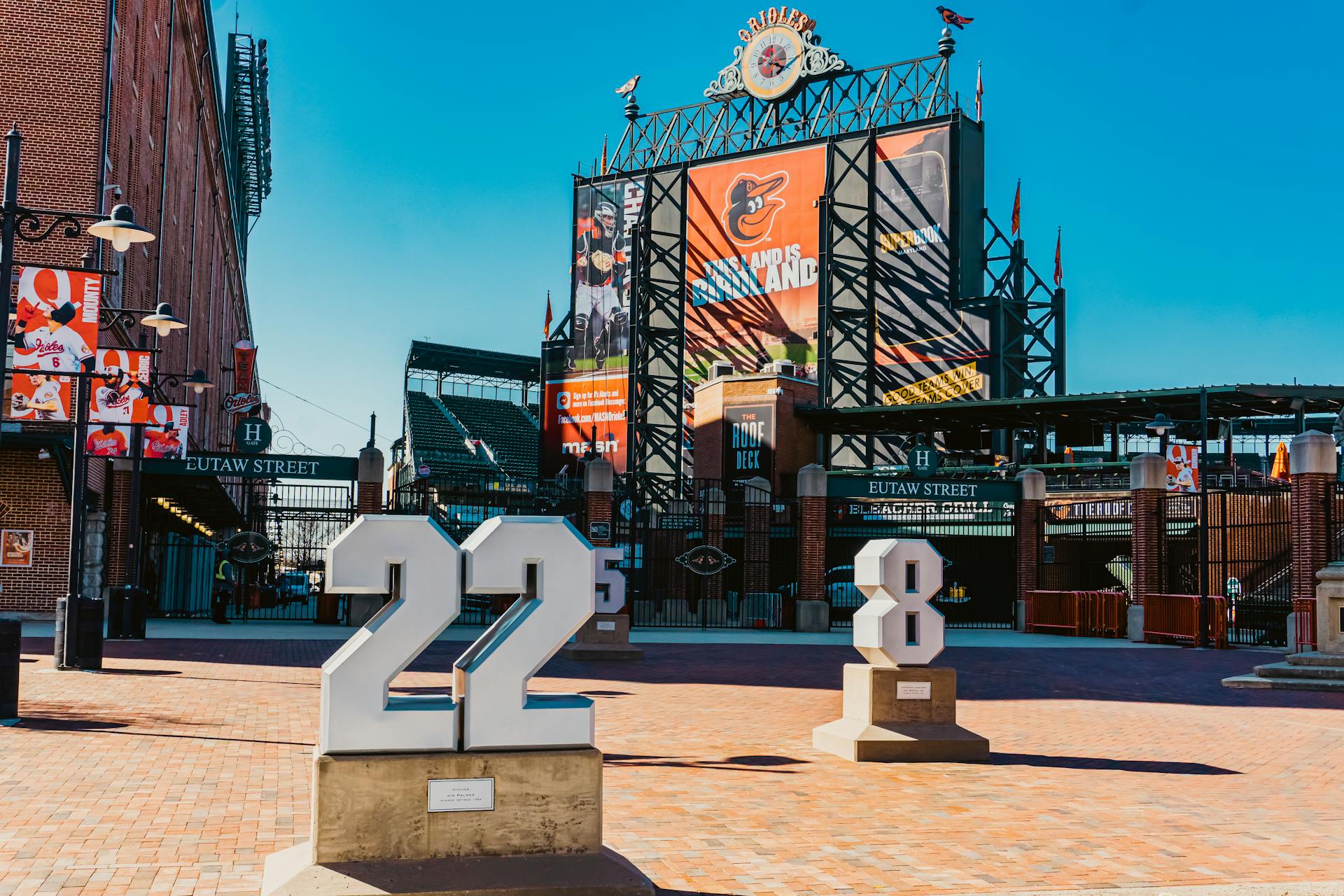
We have walked the Inner Harbor at sunrise, watched the Orioles open a season at Camden Yards, climbed the ramparts at Fort McHenry, taken out-of-town visitors through the National Aquarium, eaten the lump-meat crab cake at Faidley's, settled the long-running Old Bay versus J.O. argument over a steamed bushel, and figured out which row at Lexington Market has the best produce. From Towson and Cockeysville in the north to Annapolis in the south, from Ellicott City and Columbia in the west to Bel Air and Aberdeen in the east, we know the Baltimore-Washington corridor and the metro it anchors.
Baltimore is not a side market for our firm. It is one of the most structurally durable mergers and acquisitions markets on the East Coast, and our Baltimore business brokers are in it every week. The healthcare and life-sciences ecosystem anchored on Johns Hopkins and the University of Maryland Medical System, the cleared-defense and cybersecurity cluster around Fort Meade and Aberdeen, the logistics and distribution pipeline anchored on the Port of Baltimore, and the financial-services heritage running back through T. Rowe Price and Legg Mason all generate active, year-round deal flow across Baltimore City, Baltimore County, Howard County, Anne Arundel County, Harford County, and Carroll County.
The Baltimore market also benefits from a quietly deep buyer pool. Mid-Atlantic family offices, Baltimore-Washington corridor capital, and national private equity hunting for healthcare, defense-tech, and industrial tuck-ins all keep regional buyer demand consistent. Outside investors come into Baltimore looking for what they cannot find in the bigger coastal metros: defensible recurring revenue, lower entry valuations than New York or Boston, and businesses anchored by federal contracting or Hopkins-linked healthcare that hold up through cycles.
We work two distinct engagement types in Baltimore. When we represent a seller, we bring a vetted multi-channel buyer outreach process, a CFA-credentialed valuation, and the institutional finance background of our principals. When we work a separate buy-side mandate, which is always a different client, a different fee structure, and never the other side of a current sell-side engagement, we bring proprietary deal flow, off-market sourcing, and the ability to evaluate a target with the same discipline a strategic acquirer would apply. Buy-side and sell-side are distinct engagements with distinct compensation, and we never represent both sides of the same deal.
If you want a confidential, no-obligation conversation about your Baltimore business, our Baltimore business brokers are a single phone call or form away. Start with a free, confidential business valuation, learn more about the people behind the firm at our team page, or read about the Maryland sale process in more depth at Sell Your Baltimore Business. The International Business Brokers Association sets the professional standards we operate under, and the Greater Baltimore Committee tracks the regional economic indicators that shape Baltimore buyer demand year over year.
111 S Calvert St
Baltimore, MD 21202
(410) 777-5759
Meet the CGK Team
The CGK team includes 10 Managing Directors across our local offices. Greg Knox, CFA (Managing Principal) and Myres Tilghman (Managing Director) lead CGK's Mid-Atlantic practice, covering both Baltimore and Washington, DC. For Baltimore-area engagements, they are your primary contacts. Depending on industry expertise and capacity, we may also bring in other members of the team to support your deal.

GregKnox
ManagingPrincipal
Greg Knox, CFA has spent his 20+ year career in investment banking, private equity, a hedge fund, and institutional trading, at institutions as Deutsche Bank, T. Rowe Price, and Wachovia. After his MBA at Cornell... (click Greg's picture to read more)

MyresTilghman
ManagingDirector
Myres Tilghman has had a 25-year career in finance, investments, and capital markets. He has worked with both niche and regional investment banks up to multinational institutions. Prior to CGK Myres spent 18 years trading international derivatives for hedge funds and ... (click Myres's picture to read more)

EricLewis
ManagingDirector
Eric Lewis has over 17 years of experience in the financial industry. He has worked for a breadth of companies ranging from investment banks to proprietary trading firms. Following his MBA at the University of Chicago, Eric... (click Eric's picture to read more)

JasonClendaniel
ManagingDirector
Jason Clendaniel has been in “business” since he was seven years old. Whether mowing lawns, or delivering papers, Jason learned business from the ground up. After graduating from the United States Naval Academy... (click Jason's picture to read more)

MatthewMistica
ManagingDirector
Matthew Mistica has 13+ years of experience in finance and entrepreneurship. Matthew spent 7 years in Corporate Finance working for Chevron and Shell Oil. After his MBA at the University of Houston ... (click Matthew's picture to read more)

WesMcDonough
ManagingDirector
Wes McDonough has over 18 years of experience in both entrepreneurship and corporate finance. Previous to CGK, Wes held numerous positions, including accounting, payroll, billing, project management, and IT/Application Support at ... (click Wes' picture to read more)

MatthewZienty
ManagingDirector
Matthew Zienty has 20+ years of financial industry experience in areas ranging from institutional equity trading, currency trading, financial sales, RIA valuations, payout/loan negotiations & compliance. He has worked for ... (click Matthew's picture to read more)

DerikPolay
ManagingDirector
Derik Polay has over twenty years of experience in distressed securities and mergers and acquisitions and seven-plus years of upper-management positions at small and middle-market businesses. Derik’s previous ... (click Derik's picture to read more)

ThomasLennon
ManagingDirector
Mr. Thomas “Jay” Lennon is an Air Force veteran, combat aviator, and distinguished leader with 26 years’ experience leading multi-million dollar projects, finance, and organizational transitions, inside and outside of the government.... (click Jay's picture to read more)

LanceHupfield
Director of Business Development
Lance Hupfeld has over 25 years of experience in sales and business development management. With a broad array of valuable experience, Lance has deep knowledge in healthcare consulting... (click Lance's picture to read more)

Tax Implications of Selling a Business in 2026
If you are thinking about selling your business in 2026, the tax landscape has shifted dramatically, and mostly in your favor. Understanding the tax implications of selling a business right now is more important than ever, because the rules changed in ways that create real planning opportunities for owners who act on them. Here is […]

How to Finance a Business Acquisition
Financing a business acquisition is one of the most important steps in the buying process, and it is also one of the most misunderstood. Many first-time buyers assume they need to pay cash for the entire purchase price, or that financing a business works the same way as getting a mortgage. Neither is true. This […]
Tariffs and Small Business Valuations in 2026: How Tariff Whiplash Is Reshaping M&A
The impact of tariffs and small business valuations in 2026 has become one of the most urgent topics for business owners considering a sale, merger, or acquisition. At CGK Business Sales, we have watched a year of dramatic tariff reversals create both anxiety and opportunity in the lower and middle market. From the Supreme Court’s […]
Austin Office:
2720 Bee Caves Road
Austin, TX 78746
(512) 900-5960
San Antonio Office:
700 N Saint Mary's St
San Antonio, TX 78205
(210) 526-0094
Houston Office:
1200 Smith St
Houston, TX 77002
(713) 588-0240
Dallas Office:
325 N Saint Paul St
Dallas, TX 75201
(469) 998-1968
Phoenix Office:
40 N Central Ave
Phoenix, AZ 85004
(602) 714-7470
Colorado Springs Office:
102 S Tejon St
Colorado Springs, CO 80903
(719) 471-0115
Denver Office:
1600 Broadway
Denver, CO 80202
(303) 974-7978
Nashville Office:
424 Church St
Nashville, TN 37219
(615) 800-7118
Louisville Office:
312 S 4th St
Louisville, KY 40202
(502) 287-0332
Baltimore Office:
111 S Calvert St
Baltimore, MD 21202
(410) 777-5759
Washington DC Office:
1050 Connecticut Ave NW
Washington, DC 20036
(202) 888-6120

Business Broker Resources
Whether you are buying or selling a business in Baltimore, our expert guides walk you through every step of the process:
CGK Business Sales Locations
Explore CGK Business Sales Across Our Locations
In addition to Baltimore, CGK Business Sales provides expert M&A advisory and business brokerage services through our Washington DC business brokers teams. Whether you're selling a business in Maryland or expanding your search, our experienced brokers are ready to help.
Ready to take the next step? Learn more about selling your Baltimore business with CGK.
Looking to acquire instead? Explore opportunities on our buying a business page.
Sell Your Baltimore Business by Industry
We help Baltimore business owners sell across a wide range of industries. Explore our specialized resources: